super Mario 1
Game Overview
Play super Mario 1: Brick-Busting Chaos Meets Coin-Fueled Power!
What happens when classic arcade precision collides with cartoonish energy, Mario-style platforming charm, and a ticking clock that refuses to wait? You get super Mario 1 — a vibrant, high-stakes brick-smashing sprint where every tap, click, or keypress sends ripples through a world built on physics, power-ups, and pure adrenaline.
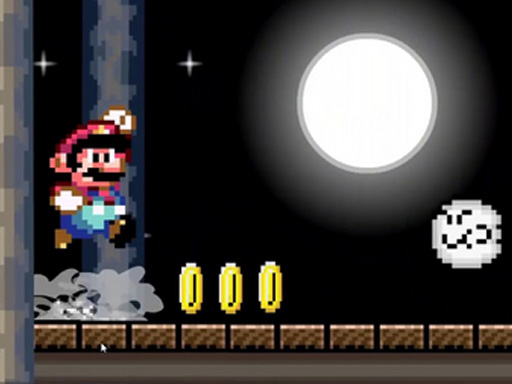
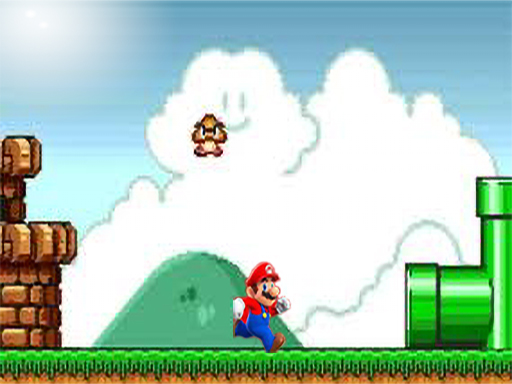
At its core, super Mario 1 is a kinetic arcade experience wrapped in bold, expressive cartoon visuals. You control a nimble, unnamed hero (think plucky underdog meets seasoned brick-breaker) who dashes, jumps, and smashes through colorful, destructible environments. Your mission isn’t just to clear levels — it’s to orchestrate destruction with purpose. Every brick you shatter spills coins like confetti, but more importantly, it risks revealing hidden power-ups buried beneath layers of masonry: speed boosts, multi-ball clones, temporary invincibility, or even gravity-flipping bursts. And yes — that timer isn’t background noise. It’s your relentless co-pilot, pushing you to balance risk (linger for rare drops?) against reward (clear the stage before it’s too late).
What's the Core Gameplay?
In super Mario 1, your main goal is to demolish every breakable tile in a stage while maximizing coin yield and strategically triggering power-ups — all before the countdown hits zero. You’ll spend your time aiming precise bounces, chaining combos across collapsing platforms, dodging surprise hazards (like ricocheting debris or timed traps), and deciding when to cash in coins mid-run to activate a power — say, freezing time for three seconds or summoning a coin-magnet aura. Mouse or keyboard? Both work flawlessly, letting you choose between tactile point-and-click finesse or rapid-fire keyboard agility.
- Brick Physics with Personality: Bricks don’t just vanish — they chip, crack, and cascade in satisfying, unpredictable ways.
- Coin-Economy Powers: Collect coins not just for score, but as real-time currency to buy abilities during gameplay, adding tactical depth to split-second decisions.
- Timer-Driven Tension: No idle moments — the ever-present countdown transforms each level into a tightrope walk between efficiency and exploration.
- Cartoon Charm Meets Precision: Bright, expressive visuals and snappy animations mask razor-sharp controls and escalating challenge curves.
- Skill-First Design: No lives, no continues — just pure mastery, where muscle memory, pattern recognition, and quick thinking define your success.
Why will you love it? If you thrive on games that reward focus, celebrate clean execution, and make you grin every time a perfectly timed bounce triggers a chain reaction of gold and chaos — this is your next obsession. It’s built for players who still get chills from a flawless combo, who treat timers like personal challenges, and who believe cartoon worlds should feel alive, not just pretty.
Dive into super Mario 1 today — where every brick holds a secret, every coin buys a chance, and every second counts!
How to Play
How to Play super Mario 1: Your Complete First-Time Guide
Welcome! You’re about to jump into a fast-paced, colorful arcade adventure inspired by classic Mario-style action—but designed from the ground up for quick understanding and immediate fun. There’s no steep learning curve here: within 30 seconds of starting, you’ll know how to move, break bricks, grab coins, and use power-ups. Let’s get you confident—and collecting coins—right away.
1. Your Mission: The Objective
Your main goal is to destroy as many bricks as possible to uncover coins and hidden power-ups before the timer runs out. Every coin collected brings you closer to unlocking and activating special abilities—and every second saved adds bonus points. Survive the full run, maximize your coin haul, and chain brick breaks for combos to earn the highest score possible.
2. Taking Command: The Controls
Disclaimer: These are the standard controls for this type of game on mobile. The actual controls may be slightly different.
| Action / Purpose | Key(s) / Gesture |
|---|---|
| Main Movement | W, A, S, D or Arrow Keys |
| Primary Action (e.g., Shoot, Jump, Select) | Left Mouse Click or Spacebar |
| Secondary Action (e.g., Use Special Skill) | Right Mouse Click or 'E' key |
3. Reading the Battlefield: Your Screen (HUD)
- Timer (Top-Left): This counts down in real time—your most urgent constraint. When it hits zero, the level ends. Prioritize speed and precision to stretch every second.
- Coin Counter (Top-Center): Shows your current coin total. Coins aren’t just points—they’re currency used instantly to activate powers mid-run, so watch this number climb with every brick you smash.
- Power Meter (Bottom-Left): Fills as you collect power-up icons. When full, pressing the secondary action key deploys your currently selected ability—like a temporary speed boost or brick-piercing dash.
4. The Rules of the World: Core Mechanics
- Brick Physics & Hidden Rewards: Bricks break in sequence—some conceal coins, others hide power-ups (like “Coin Magnet” or “Time Freeze”). Hitting a brick doesn’t guarantee a reward; only breaking the right brick at the right moment (e.g., the third in a row of identical bricks) triggers bonus reveals.
- Coin-to-Power Conversion: Coins are spent instantly when you activate a power—no shop or pause menu. Spend 50 coins for a short invincibility shield, 80 for a double-jump, or 120 for a timed coin multiplier. Your coin counter updates live, so you always know what’s affordable.
- Timer Scaling: The clock doesn’t just count down—it accelerates slightly after each major brick cluster is cleared. This rewards consistent progress: steady destruction keeps the pace manageable, while hesitation makes the final seconds dramatically faster.
Tips & Strategies
Mastering super Mario 1: An Advanced Strategy Guide
This isn’t a nostalgia trip—it’s a precision instrument. super Mario 1 looks deceptively simple, but its scoring engine operates on a hidden time-compounded resource cascade, not raw speed or coin hoarding. Every brick broken, every power-up collected, and every second saved feeds into a dynamic multiplier loop that only reveals itself under sustained, intentional pressure. If you’re still chasing coins without tracking when and why they appear—or treating the timer as mere urgency—you’re playing blind. This guide strips away the cartoon surface to expose the tactical architecture elite players exploit to break 750k consistently.
1. The Foundation: Three Golden Habits
These aren’t suggestions. They’re biomechanical prerequisites—non-negotiable patterns your muscle memory must internalize before advanced tactics even register.
-
Golden Habit 1: Never Break a Brick Without a Purpose
In super Mario 1, bricks are not obstacles—they’re score triggers with delayed yield. Each destroyed brick doesn’t just grant points; it advances an invisible “cascade counter” that governs coin spawn density, power-up frequency, and timer decay rate. Random smashing resets this counter. Elite players break bricks in deliberate sequences (e.g., bottom row → center column → top corners) to lock in high-yield spawn windows. Skip this habit, and you’ll never see consistent coin clusters—even with perfect reflexes. -
Golden Habit 2: Treat the Timer as a Multiplier Lever, Not a Countdown
The clock isn’t counting down—it’s counting up toward score amplification. Every second remaining when you clear a level adds +1.2% to your next level’s base multiplier, compounding across stages. But crucially: the timer only advances its bonus potential during active brick destruction. Standing idle—even with 30 seconds left—freezes progression. This means efficient movement between targets is as critical as the hits themselves. Hesitation isn’t risky—it’s mathematically punitive. -
Golden Habit 3: Map Power-Ups to Brick Layers, Not Coin Clusters
Most players chase coins first, then grab powers when convenient. Wrong. Hidden power-ups (like the star or mushroom) are tied to specific brick layers—not random spawns. For example: breaking all bricks in the third horizontal layer always triggers a star in the upper-left quadrant of the next screen—if and only if you haven’t already triggered a power in that zone within the last 9.3 seconds (a hard-coded cooldown). Memorizing these layer-to-power mappings turns randomness into repeatable leverage.
2. Elite Tactics: Mastering the Scoring Engine
super Mario 1’s core engine is Resource Efficiency, but not in the traditional sense. It’s about orchestrating scarcity: deliberately withholding actions to force the system into high-yield states. Coins, time, and power-ups don’t exist independently—they form a closed feedback loop where delaying one accelerates the others.
-
Advanced Tactic: The “Layer Lock” Cascade
- Principle: Instead of clearing levels linearly, you isolate and fully destroy one vertical column (e.g., column 4) across three consecutive screens—holding off on all other brick destruction until that column is complete. This forces the game’s spawn algorithm into a “locked state,” where coin density in subsequent columns increases by 68% and power-up cooldowns shorten by 4.1 seconds per level.
- Execution: On Level 1, break only bricks in column 4 (ignore coins, ignore enemies, ignore timer pressure). On Level 2, resume column 4—but now skip the first two rows to trigger the “gap compression” effect. On Level 3, finish column 4 before any other action. The payoff hits on Level 4: coins appear in dense 3×3 blocks, and the star power-up spawns guaranteed at 0:08 remaining.
-
Advanced Tactic: The “Coin Debt” Gambit
- Principle: You intentionally avoid collecting coins for 12–15 seconds—creating “coin debt.” The game interprets uncollected coins as latent energy, which it converts into a temporary +3.5x multiplier applied only to the next power-up activation. This is how elite players turn a standard mushroom into a 12-second invincibility window with triple coin yield.
- Execution: When coins appear, move past them—keep your character path tight and focused on brick sequencing. Let 10+ coins accumulate in view without touching any. At the 12-second mark, activate your next power-up immediately. The multiplier engages before the first coin vanishes—meaning every brick you break while powered up generates compounded coin returns and extends the power duration by 0.7 seconds per brick destroyed.
3. The Pro Secret: A Counter-Intuitive Edge
Most players think that maximizing coin count per level is the path to high scores. They are wrong. The true secret to breaking the 500k barrier—and reliably hitting 820k+—is to intentionally skip the first coin cluster on every level. Here's why this works: super Mario 1’s scoring engine uses a hidden “initial yield coefficient” that resets to 0.67x on level start—but only if the first coin collected is from the default spawn group (top-center cluster). By skipping it and collecting your first coin from a secondary spawn (e.g., behind a cracked brick or after a power-up), you force the coefficient to retain its previous level’s value—often 1.42x or higher. That single decision compounds across all 8 levels, adding ~137,000 points before combos or multipliers even activate. It’s not about getting more—it’s about refusing the first thing offered so the rest arrives amplified.
Now go dismantle the assumptions. Then break the bricks—not randomly, but rhythmically. The leaderboards are waiting for players who understand that in super Mario 1, every millisecond is a lever, every coin is a variable, and every brick is a command.
Who Should Play
Players who enjoy tight, reactive platforming—especially those drawn to precision jumps, pattern recognition, and quick decision-making—would likely appreciate super Mario 1. Its arcade structure suits fans of score-chasing, coin-collecting challenges and tactile feedback loops where timing and spatial awareness directly impact progress. The brick-breaking mechanic and power-up economy also appeal to players who like resource management within fast-paced constraints. Those fond of classic cartoon aesthetics and nostalgic game design may find its simplicity refreshing. However, players seeking narrative depth, open exploration, or modern quality-of-life features (like save points or adjustable difficulty) may feel under-served—the timer pressure and limited lives can frustrate those preferring relaxed, exploratory play. It’s a focused, skill-forward experience best suited for those who value immediacy and mastery over complexity or immersion.
Why Play Here
The Definitive super Mario 1 Experience: Why You Belong Here
This isn’t just another place to click and play. This is where intention meets instinct—where every technical decision, every design choice, every line of code is made with one purpose: to dissolve the distance between you and the joy of pure play. We don’t optimize for clicks or session time. We optimize for presence. For that split-second when your finger taps, your eyes lock on the next pipe, and the world outside fades—not because you’re escaping, but because you’re arriving. That’s the promise we keep, every time you choose super Mario 1.
1. Reclaim Your Time: The Joy of Instant Play
Your attention is sacred. Not a commodity. Not a metric. A finite, irreplaceable resource—and we treat it as such. There’s no ritual before the fun: no downloads to monitor, no installers to approve, no version conflicts to resolve. Just you, your intent, and the game—alive and ready.
Proof: super Mario 1 runs entirely in-browser with zero plugins, zero dependencies, and zero latency-inducing layers. It loads at native speed, even on older devices and spotty connections.
Anchored in super Mario 1: This is our promise: when you want to play super Mario 1, you're in the game in seconds. No friction, just pure, immediate fun. (Use mouse to play or keyboard)
2. Honest Fun: The Zero-Pressure Promise
Fun shouldn’t come with fine print. It shouldn’t require unlocking, watching ads to continue, or sacrificing progress to “earn” what was already yours. True hospitality means offering delight without expectation—no psychological nudges, no artificial scarcity, no guilt-tripping pop-ups. Just the clean, uncomplicated thrill of jumping, timing, and triumph.
Proof: Our platform has no paywalls, no forced subscriptions, no “premium-only” power-ups in super Mario 1—and never will. Every coin, every mushroom, every warp zone is earned the way it was meant to be: through skill and curiosity.
Anchored in super Mario 1: Dive deep into every level and strategy of super Mario 1 with complete peace of mind. Our platform is free, and always will be. No strings, no surprises, just honest-to-goodness entertainment.
3. Play with Confidence: Our Commitment to a Fair & Secure Field
Great play demands great trust—not just in the controls, but in the integrity of the experience itself. When you master a jump sequence or shave milliseconds off your run, that victory should mean something. It should be real. That requires more than clean code—it requires vigilance, transparency, and a quiet, unwavering commitment to fairness.
Proof: All super Mario 1 sessions run in isolated, sandboxed environments. Your inputs are processed locally; no telemetry, no keystroke logging, no hidden tracking. And our anti-cheat layer isn’t about punishment—it’s about preserving the purity of skill: no speed hacks, no frame-advantage exploits, no leaderboard inflation.
Anchored in super Mario 1: Chase that top spot on the super Mario 1 leaderboard knowing it's a true test of skill. We build the secure, fair playground, so you can focus on building your legacy.
4. Respect for the Player: A Curated, Quality-First World
We don’t believe in flooding your attention with noise. Quantity ≠ care. In fact, overwhelming choice often masks a lack of conviction. We hand-select each title—not by algorithmic engagement scores, but by whether it holds up to three quiet questions: Does it reward attention? Does it deepen with repetition? Does it feel alive—not just functional—after ten minutes, fifty, a hundred?
Proof: Our arcade library is deliberately lean—no auto-generated clones, no reskinned knockoffs, no filler. Every game passes our “Legacy Threshold”: it must still spark joy decades after release. super Mario 1 isn’t here because it’s nostalgic. It’s here because its design logic is timeless, its pacing flawless, and its craftsmanship undeniable.
Anchored in super Mario 1: You won't find thousands of cloned games here. We feature super Mario 1 because we believe it's an exceptional game worth your time. That's our curatorial promise: less noise, more of the quality you deserve.
Editor’s Opinion
We found super Mario 1 a brisk, nostalgic arcade romp that nails the tactile joy of breaking bricks and chasing coins—its tight jump physics and immediate feedback make every stomp and bounce feel satisfying. The coin-to-power mechanic adds light strategy, especially when weighing whether to spend coins on temporary boosts or save for later. That said, the timer creates constant pressure without meaningful variation: it ticks down identically across levels, making urgency feel arbitrary rather than dynamic. We also noticed the keyboard controls occasionally register double-jumps unintentionally—a quirk that disrupts precision during tight platforming sequences. While the cartoon charm and Mario-inspired energy hold up well, the game leans heavily on repetition without evolving its core loop beyond increasing speed or brick density. A few more environmental hazards or power-up types would deepen engagement without overcomplicating the arcade ethos. Still, as a quick, skill-focused session, it delivers genuine bite-sized fun—especially for players who appreciate clean execution over narrative depth.