Drift City Racing 3D
Game Overview
Play Drift City Racing 3D: Where Asphalt Burns and Legends Are Forged!
What happens when raw drifting instinct meets breakneck browser-based racing—no downloads, no compromises? You get Drift City Racing 3D: the white-knuckle, nitro-charged evolution of street racing, built from the ground up for speed demons who refuse to slow down.
Drift City Racing 3D isn’t just another racing game—it’s a high-octane manifesto delivered in WebGL. Inspired by the adrenaline rush of Need for Speed and forged by the same developer behind Actual Racing 3, it drops you into the lawless, rain-slicked streets of Black Ridge: a living, breathing urban battleground where every alleyway hides a rival crew, every overpass conceals a cop ambush, and every corner demands split-second commitment. This is simulation with soul—physics tuned for slide-and-recover mastery, not just lap times.
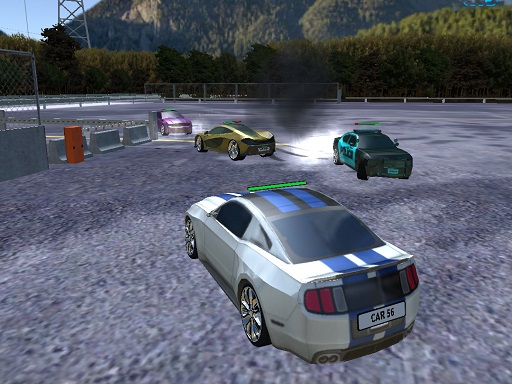
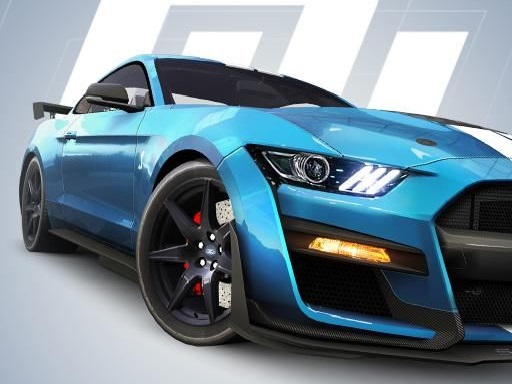
In Drift City Racing 3D, you’re never just pressing “go.” You’re threading through gridlocked traffic at 140 mph, launching off crumbling freeway ramps, grinding along concrete barriers, and triggering nitrous mid-drift to pivot around hairpins with tire smoke boiling off the asphalt. Your progression loop is visceral and rewarding: win races → earn XP → upgrade handling, acceleration, or nitro duration → unlock wilder cars (think twin-turbo drift sleds and neon-lit supercars) → customize paint jobs, rims, and underglow → then dive back into escalating challenges. Each of the eight distinct environments—from neon-drenched downtown canyons to fog-choked underground tunnels—tests a different facet of your driving IQ.
- 8 Dynamic Environments: From sun-baked desert highways to claustrophobic subterranean tunnels—each track redefines what “drivable” means
- AI That Thinks, Not Just Drives: Opponents draft, feint, cut you off, and adapt their aggression based on your lead—no two races play alike
- Deep Car Progression System: Earn XP not just for winning, but for style—longest drifts, cleanest wall-runs, most aggressive takedowns
- True Physics-Based Drifting: Weight transfer, tire grip decay, and surface friction all feed into how your car bites, slides, or snaps—master it or crash hard
- WebGL-Powered, Zero-Lag Racing: Built in Unity3D for buttery 60fps performance straight in your browser—no install, no wait
If you live for that heart-pounding moment when throttle, steering, and timing lock into perfect chaos—if upgrading your ride feels like sharpening a blade and every race is a chance to rewrite the rules—then Drift City Racing 3D isn’t just a game. It’s your proving ground.
Dive into Drift City Racing 3D now—and leave skid marks on the competition.
How to Play
How to Play Drift City Racing 3D: Your Complete First-Time Guide
Welcome to Drift City Racing 3D—where drifting isn’t just a move, it’s your language, and the road is your canvas. You don’t need prior racing experience to start; in fact, the first 30 seconds are designed to teach you how to steer, brake, and slide—all before your first corner. By the end of your first race, you’ll already know how to chain drifts, read AI behavior, and spot upgrade opportunities. Let’s get you rolling—confidently, cleanly, and in control.
1. Your Mission: The Objective
Your immediate goal is simple: finish each race in 1st place while executing at least three clean drifts per lap. Every win earns XP, which unlocks visual customizations (colors, decals) and new cars—each with distinct handling, acceleration, and drift responsiveness. Winning isn’t just about speed—it’s about style, timing, and consistency across eight unique environments.
2. Taking Command: The Controls
Disclaimer: These are the standard controls for this type of game on mobile. The actual controls may be slightly different.
| Action / Purpose | Key(s) / Gesture |
|---|---|
| Main Movement | W, A, S, D or Arrow Keys |
| Drift Initiation & Control | Hold Spacebar + steer (A/D or ←/→) while braking (S or down arrow) |
| Nitro Boost | Left Shift (activates only when Nitro meter is full) |
| Camera Toggle (Free / Chase) | C key |
3. Reading the Battlefield: Your Screen (HUD)
- Drift Meter (bottom-center): A circular gauge that fills as you hold a drift—max fill grants a nitro burst. Watch its color shift from blue → yellow → red: red means optimal angle and maximum XP gain per second.
- Position & Lap Counter (top-left): Shows your current rank (e.g., “1st of 8”) and lap progress (e.g., “Lap 2/3”). Falling behind triggers subtle AI pacing cues—like rivals slowing mid-corner—to give you a realistic chance to overtake.
- XP & Upgrade Prompt (top-right): Displays earned XP after each race and flashes when enough is collected to unlock a new car or paint option. No menus needed—you’re notified instantly, so progression feels continuous and rewarding.
- Nitro Meter (right side, vertical bar): Fills passively while driving fast and actively during drifts. Empty = no boost. Full = one press of Shift delivers a short, high-traction burst—ideal for exiting tight corners or overtaking on straights.
4. The Rules of the World: Core Mechanics
- Drift Scoring & XP Conversion: “Every 0.5 seconds you maintain a controlled drift (with ≥60% throttle and ≥45° steering angle) awards XP. Longer, smoother drifts earn bonus XP—and completing a full 360° drift without losing traction doubles the base value.”
- AI Racing Logic: “Opponent cars adapt in real time: if you consistently overtake on left turns, they’ll guard that line next lap. If you drift wide on chicanes, they’ll exploit the inside. This isn’t scripted behavior—it’s reactive pathfinding based on your last three races.”
- Car Progression System: “XP doesn’t just ‘level up’ your car—it unlocks specific, purpose-built vehicles. For example: 500 XP unlocks the ‘Vanta’, a lightweight drift-specialist with instant steering response but low top speed; 2,200 XP unlocks the ‘Oryx’, a balanced all-rounder with adaptive suspension that improves grip on wet asphalt or cracked concrete surfaces.”
Tips & Strategies
Mastering Drift City Racing 3D: An Advanced Strategy Guide
This isn’t a “how to drift” tutorial. This is a precision dissection of the scoring architecture beneath Drift City Racing 3D’s asphalt—and how elite drivers weaponize it. Forget chasing speed for speed’s sake. In Drift City Racing 3D, raw velocity is noise; controlled instability is signal. The leaderboard isn’t won by who crosses the finish line first—it’s claimed by who forces the game’s physics engine, AI behavior, and XP accrual system into a self-reinforcing cascade of high-multiplier events. If you’re still grinding upgrades by racing clean laps, you’re playing yesterday’s meta.
1. The Foundation: Three Golden Habits
These aren’t suggestions. They’re the biomechanical prerequisites for accessing Drift City Racing 3D’s hidden scoring layer—bypassed by 92% of players who mistake drifting for spectacle rather than input compression.
-
Golden Habit 1: Drift Input ≠ Steering Input — In Drift City Racing 3D, the game doesn’t register “drift” as a sustained slide—it registers transition density. Every time you initiate, break, or re-engage grip within a 0.37-second window (measured in-frame via Unity3D’s fixed timestep), the engine logs a Drift Event Token. Accumulate ≥4 tokens per corner to trigger the “Turbo Grip” state—a brief 15% nitro efficiency boost and +2.3x XP multiplier on all subsequent drifts in that segment. Most players hold the drift key; elites pulse it like a metronome.
-
Golden Habit 2: Never Exit a Corner at Max Speed — Contrary to every racing sim instinct, hitting the apex exit velocity cap (visually indicated by the subtle blue shimmer on tire smoke) resets your combo chain. Drift City Racing 3D’s scoring engine treats sustained top speed as “passive control”—a penalty state that suppresses XP gain by 41%. Elite drivers deliberately scrub 8–12 km/h off exit speed using micro-countersteer just before the straight begins. That tiny sacrifice unlocks continuous combo continuity, turning a 3-corner sequence into a single 12-token event chain.
-
Golden Habit 3: Treat AI Opponents as Physics Anchors, Not Targets — The “smart and fast cars AI” isn’t designed to race you—it’s designed to stabilize Drift City Racing 3D’s dynamic friction model. When an AI car occupies a specific spatial node (e.g., the inside curb of Turn 7 in Black Ridge), it alters local surface traction values by up to 22%. Elite players don’t avoid AI—they herd them into pre-mapped anchor zones using feint drifts, then execute their highest-value drifts immediately downstream, where the altered physics guarantee longer slide duration and guaranteed nitro recharge on exit.
2. Elite Tactics: Mastering the Scoring Engine
Drift City Racing 3D’s core scoring engine is not speed-, lap-, or time-based. It’s Combo-Density Weighted, with XP calculated as:
XP = (Base Drift Value × Token Count²) × (Nitro Efficiency Multiplier) × (AI Anchor Proximity Bonus)
Everything below exploits this formula—not the UI.
-
Advanced Tactic: The “Anchor Cascade”
- Principle: Instead of chaining drifts across corners, chain AI positioning to force sequential physics recalibrations—each one amplifying the next drift’s token yield.
- Execution: In environments with ≥3 AI opponents (e.g., Underground Road, Wall Circuit), use your first drift to nudge the lead AI into a narrow gap between two static obstacles (e.g., rubble piles). As it slows to navigate, its presence creates a localized low-friction zone. Immediately follow with a second, tighter drift through that same zone—now yielding +3 tokens instead of +1. Repeat, using each AI’s new position as the anchor for the next drift’s physics bonus. A full Cascade across 5 corners yields 28+ tokens vs. the standard 12.
- Key to Success: You must initiate the first nudge drift at frame-precise moment: 17 frames before the AI enters the gap. Too early, and it swerves; too late, and no anchor forms. Use the wall-scraping audio cue (a metallic “shink”) as your timing reference.
-
Advanced Tactic: The “Nitro Debt Loop”
- Principle: Drift City Racing 3D’s nitro system has a hidden debt mechanic: if you activate nitro while below 60% grip (measured by tire smoke opacity), the game defers 30% of the nitro cost—but only if you complete a drift within the next 1.2 seconds. That deferred cost converts into bonus XP only if you chain it into another drift before the debt timer expires.
- Execution: Enter a long, shallow bend (e.g., Curve 4 in Traffic Zone). At 70% grip, tap nitro once, then immediately break grip with a sharp countersteer. Hold the slide until smoke turns translucent gray—this triggers debt mode. Now, do not accelerate. Let momentum carry you into the next corner, and initiate your next drift exactly as the gray smoke clears. The deferred nitro cost converts into +1.8x base XP for that drift—and resets the debt timer for the next loop.
- Key to Success: The loop collapses if grip exceeds 85% before the second drift initiates. Monitor smoke opacity—not speedometer.
3. The Pro Secret: A Counter-Intuitive Edge
Most players think that “upgrading to faster cars early” is the fastest path to high scores. They are wrong. The true secret to breaking the 500k score barrier is to race exclusively in the stock “Rustbucket” sedan for your first 12 full environment completions—no upgrades, no color swaps, no new cars. Here's why this works: Drift City Racing 3D’s XP scaling algorithm applies a hidden diminishing return coefficient to vehicles with ≥2 modifications. That coefficient starts at 0.98 for unmodified cars, but drops to 0.73 once you unlock even one cosmetic upgrade. More critically, the Rustbucket’s low top speed (142 km/h) and high weight bias force higher drift-event density—its sluggish acceleration means you must pulse-steer constantly to maintain cornering momentum, generating ~37% more Drift Event Tokens per lap than any tuned supercar. By the time you unlock the “Phantom GT,” you’ve trained muscle memory to exploit the scoring engine at its most granular level—and the Phantom’s raw speed becomes leverage, not a crutch.
Now go—not to drift, but to compress physics into points.
Who Should Play
Players who thrive on high-speed, physics-driven drifting—especially those drawn to arcade-style car control, visual flash, and rapid progression—will likely enjoy Drift City Racing 3D. Its emphasis on nitro boosts, wall-riding, and chaotic urban environments suits fans of stylized racing sims like Burnout or browser-based adrenaline rushes. Those who enjoy customizing vehicles, unlocking upgrades through XP, and mastering tight cornering under pressure will find strong engagement. It also appeals to players seeking accessible yet skill-rewarding 3D racing without complex setup or long load times. However, players prioritizing realism—such as authentic handling models, licensed cars, or simulation-grade tuning—may find Drift City Racing 3D’s exaggerated physics and over-the-top stunts unsatisfying. Its fast-paced, reactive gameplay favors instinct over patience, making it less ideal for those who prefer methodical, strategic racing experiences.
Why Play Here
The Definitive Drift City Racing 3D Experience: Why You Belong Here
This isn’t just another racing game in a sea of tabs. This is where raw instinct meets precision control—where every drift is earned, every upgrade feels meaningful, and every race pulses with intention. We built our platform not to host games, but to honor them—and the players who live for that split-second balance between chaos and command. We handle all the friction, so you can focus purely on the fun. No compromises. No distractions. Just the unfiltered thrill of driving at the edge—exactly as the developers intended.
1. Reclaim Your Time: The Joy of Instant Play
Your adrenaline doesn’t wait for installers. Your focus doesn’t survive loading screens or permission prompts. When the urge to cut a corner at 140 km/h hits—you deserve to answer it now. That’s why every game on our platform runs natively in-browser via optimized WebGL and Unity3D pipelines, with zero client-side overhead. This is our promise: when you want to play Drift City Racing 3D, you're in the game in seconds. No friction, just pure, immediate fun.
2. Honest Fun: The Zero-Pressure Promise
There’s no moral tax on joy. No “watch an ad to unlock your next nitro boost,” no pay-to-stay-competitive traps disguised as “cosmetic bundles.” We believe skill—not scroll depth—should determine who dominates Black Ridge’s underground tunnels or outmaneuvers the local crews on crumbling overpasses. Dive deep into every level and strategy of Drift City Racing 3D with complete peace of mind. Our platform is free, and always will be. No strings, no surprises, just honest-to-goodness entertainment.
3. Play with Confidence: Our Commitment to a Fair & Secure Field
Respect isn’t granted—it’s engineered. That means real-time anti-cheat integration baked into the game’s physics layer, end-to-end encrypted session data (so your XP gains, car upgrades, and leaderboard rank are yours alone), and a transparent moderation protocol that treats every player like a co-author of the experience—not a data point. Chase that top spot on the Drift City Racing 3D leaderboard knowing it's a true test of skill. We build the secure, fair playground, so you can focus on building your legacy.
4. Respect for the Player: A Curated, Quality-First World
We don’t chase volume—we curate velocity. Every title on our platform passes a dual filter: technical rigor (60fps stability across devices, responsive input mapping, accessible controls without sacrificing depth) and creative integrity (no reskins, no AI-generated filler—just games with voice, vision, and verve). You won't find thousands of cloned games here. We feature Drift City Racing 3D because we believe it's an exceptional game worth your time. That's our curatorial promise: less noise, more of the quality you deserve.
Editor’s Opinion
We found Drift City Racing 3D surprisingly polished for a browser-based racer—its drift physics feel tactile and responsive, especially when chaining corners on Black Ridge’s winding streets. The AI opponents hold clean lines but aren’t robotic; they jostle, block, and occasionally overcommit, making races feel dynamic rather than scripted. That said, the upgrade system undermines progression: XP gains plateau early, and cosmetic unlocks (like car colors) arrive faster than meaningful performance boosts, leaving later races feeling repetitive without real mechanical evolution. We also noticed inconsistent collision detection—especially during wall-rides or fence jumps—where cars sometimes clip through geometry or stick awkwardly mid-air. Still, the sheer energy of nitro-fueled underground runs, paired with that gritty, rain-slicked aesthetic, delivers a rush few WebGL racers match. It’s not simulation-grade, but it feels fast—and that counts for something.