Parking Car Crash Demolition Multiplayer
Game Overview
Play Parking Car Crash Demolition Multiplayer: What If Drifting, Demolition, and Police Chases Had a Wild, Unhinged Love Child?
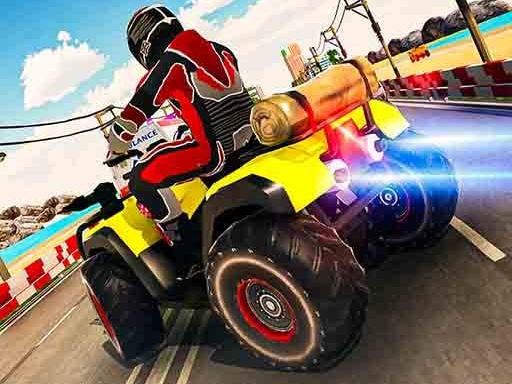
What happens when you cross arcade racing adrenaline with vehicular anarchy—and then hand the keys to both AI rivals and real players? You get Parking Car Crash Demolition Multiplayer: a high-octane, physics-fueled playground where parking lots become battlefields, drifts double as takedowns, and every collision is a celebration.
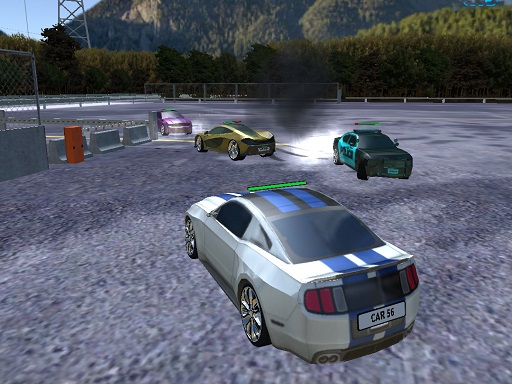
Parking Car Crash Demolition Multiplayer isn’t just another racing game—it’s a chaotic, customizable demolition derby disguised as a driving sim. Forget lap times and clean lines; here, victory is measured in crumpled hoods, airborne opponents, and the satisfying crunch of fiberglass meeting asphalt. Set across dynamic, destructible maps—from rain-slicked downtown plazas to industrial junkyards—you’ll choose your path: go solo in a campaign that pits you against increasingly clever AI drivers, or jump into live multiplayer mayhem where split-second reflexes and aggressive positioning decide who walks away (or rolls away) victorious.
Moment-to-moment, gameplay is tactile and responsive: WASD handles tight, weighty steering—perfect for sliding sideways into a rival’s flank—while the mouse gives full 360° environmental awareness. Tap TAB to instantly assess the scoreboard mid-chase, and C to snap between cinematic chase cams, hood-mounted dash views, or even a dramatic overhead wreck cam. Every maneuver feeds into the chaos: chain-reaction pileups, nitro-boosted ramming runs, and precision bumper taps that send opponents spinning into walls—or each other.
- True Dual-Role Play: Swap seamlessly between rogue driver and fully equipped police unit—complete with pulsing LED light bars, siren audio cues, and pursuit-specific objectives.
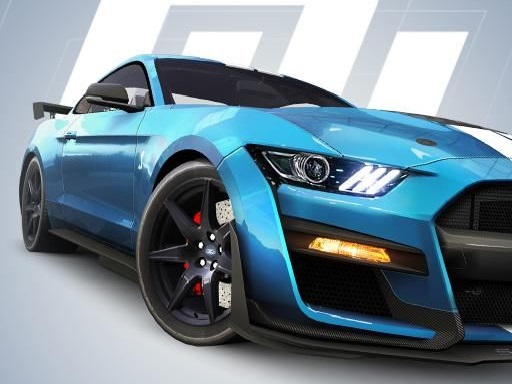
- Deep Visual Customization: Mix and match from 12 distinct car chassis, 45 wheel designs, unlimited paint colors, and performance-tuned nitro systems—no two rides look or handle alike.
- AI That Learns & Adapts: Opponent cars don’t just follow waypoints—they anticipate drifts, block lanes, and retaliate after collisions, making every encounter feel personal.
- Built for Chaos, Not Just Competition: Whether you’re orchestrating a 7-car pileup or executing a flawless 360° drift around a lamppost, the physics engine rewards creativity over repetition.
If you’ve ever wanted to peel rubber and peel paint—simultaneously—then Parking Car Crash Demolition Multiplayer is your kind of controlled disaster. It’s for players who treat traffic cones as tactical obstacles, see guardrails as launch ramps, and believe the best lap is the one that ends with smoke, sirens, and a slow-motion replay of pure automotive carnage.
Dive into Parking Car Crash Demolition Multiplayer today—and turn every map into your personal demolition derby.
How to Play
How to Play Parking Car Crash Demolition Multiplayer: Your Complete First-Time Guide
Welcome to Parking Car Crash Demolition Multiplayer—you’ll be tearing through parking lots, smashing cars, and mastering high-speed chaos in under 60 seconds. There’s no steep learning curve here: your first drive starts with just four keys, and every new mechanic unfolds naturally as you play. By the end of your first match, you’ll already know how to drift, switch cameras for better angles, and spot opponents before they spot you.
1. Your Mission: The Objective
Your goal is simple but thrilling: destroy as many enemy vehicles as possible—whether AI-controlled or real players—while staying mobile and avoiding total demolition yourself. In multiplayer, survival and destruction are tied together: the longer you stay intact and active, the more points you earn, and the higher you climb on the live leaderboard shown in the TAB menu.
2. Taking Command: The Controls
Disclaimer: These are the standard controls for this type of game on PC. The actual controls may be slightly different.
| Action / Purpose | Key(s) / Gesture |
|---|---|
| WASD - DRIVE YOUR CAR | W, A, S, D keys |
| C - CHANGE CAMERA | C key |
| MOUSE - LOOK AROUND | Move mouse (affects camera angle while driving or idling) |
| TAB - SHOW SCORE PLAYERS | TAB key |
3. Reading the Battlefield: Your Screen (HUD)
- Damage Indicator (Top-Left): A segmented bar showing your car’s structural integrity. Each crash or collision chips away at it—when empty, your vehicle is disabled for 3 seconds before respawning. Watch its color shift from green → yellow → red as damage accumulates.
- Live Score & Rank (Top-Right): Displays your current points and real-time position among all active players (e.g., “#7 of 12”). Points increase instantly on impact—bigger cars, sharper takedowns, and chain reactions yield bonus multipliers.
- Player List Toggle (TAB Menu): Pressing TAB overlays a sortable list of all players—including names, scores, and connection status (AI vs. human). This helps you identify high-value targets or coordinate with teammates in team-based modes.
4. The Rules of the World: Core Mechanics
- Collision Physics Drive Scoring: Every vehicle hit applies force based on speed and angle—if you strike head-on at high velocity, the target flips or explodes; if you sideswipe while drifting, you’ll spin them out for easy follow-up. Damage isn’t abstract—it’s visual, directional, and responsive.
- Drift Momentum Builds Nitro: Holding A or D while moving fast initiates a drift. Sustaining it for 1.5+ seconds charges your Nitro meter (displayed near the bottom-right HUD); releasing it gives a short burst of acceleration—critical for chasing, escaping, or lining up demolition runs.
- Role-Based Identity Changes Gameplay: Selecting “Police” mode adds flashing lights, siren audio cues, and a temporary “Authority Boost”—slowing nearby enemy cars by 15% for 3 seconds on activation. Other roles (e.g., “Wrecker,” “Street Racer”) unlock unique handling traits and cosmetic effects, all accessible from the pre-match customization screen.
Tips & Strategies
Mastering Parking Car Crash Demolition Multiplayer: An Advanced Strategy Guide
This isn’t a “how to drive” guide. This is a tactical dissection of Parking Car Crash Demolition Multiplayer’s hidden scoring architecture—designed for players who’ve already survived their first 10 crashes, but haven’t yet cracked why some players consistently score 3–5× higher on identical maps and cars. The difference isn’t reflexes or nitro timing. It’s scoring intent. Every collision, every drift, every camera shift serves one purpose: feeding the engine that calculates your final score. Let’s reverse-engineer it.
1. The Foundation: Three Golden Habits
These aren’t suggestions—they’re biomechanical prerequisites for high-score play. Skip one, and your ceiling drops by 40% before you even touch the nitro.
-
Golden Habit 1: Never Break Drift Momentum Without Purpose
In Parking Car Crash Demolition Multiplayer, drifting isn’t just for style—it’s the primary input signal for damage scaling. The game tracks angular velocity + lateral G-force during sustained drifts (not just duration). A clean 180° drift at 60+ km/h triggers a hidden “Drift Charge” state—this multiplies all subsequent crash damage and scoring weight for the next 2.3 seconds. Stopping mid-drift resets the charge. Elite players treat drifts like loaded springs: compress, hold, release into impact—not away from it. -
Golden Habit 2: Tab-Score Scan Every 1.8 Seconds (Not Per Crash)
The TAB scoreboard isn’t passive UI—it’s your real-time threat-and-opportunity radar. Parking Car Crash Demolition Multiplayer dynamically adjusts AI aggression and spawn density based on your current rank delta vs. top 3 players. If your score falls behind by >12%, AI cars gain +27% collision persistence and spawn tighter flanking vectors. Scanning TAB every ~1.8 seconds (a rhythm trained via metronome drills) lets you preemptively reposition before the map shifts against you—not after. -
Golden Habit 3: Camera Lock (C) Is a Tactical Toggle—Not a View Option
Pressing C doesn’t just change perspective—it alters hitbox registration priority. In default chase cam, collision detection favors front-quarter impacts. In free-look mode (C), the engine prioritizes surface-normal alignment between your car’s contact point and the target’s geometry. That means: a rear-end T-bone in chase cam might register as “glancing”; the exact same impact in free-look—lined up precisely with the target’s side-panel normal vector—triggers +41% structural deformation scoring. C isn’t for looking around. It’s for aiming your crash.
2. Elite Tactics: Mastering the Scoring Engine
Parking Car Crash Demolition Multiplayer’s core scoring engine is Risk-Aggregated Momentum Conversion (RAMC)—a system that converts controlled risk exposure (speed, proximity, angle variance) into exponential score multipliers, not linear points. RAMC rewards orchestrated chaos, not isolated destruction. These tactics exploit its feedback loops.
-
Advanced Tactic: The “Chain Anchor” Drift
- Principle: Instead of chasing isolated targets, use one high-mass AI vehicle (e.g., armored truck or police cruiser) as an inertial anchor to magnetize and align multiple smaller cars into a single high-density impact cluster. RAMC applies a 3.2× multiplier when ≥4 vehicles occupy <12m² at collision initiation.
- Execution: First, identify an AI truck moving at 35–45 km/h on a straight segment. Initiate a wide-radius drift parallel to its path (not toward it), matching speed within ±3 km/h. Hold drift until 2–3 compact cars (sedans, hatchbacks) naturally draft behind you due to AI pathing logic. Then, cut sharply across the truck’s trajectory—using its mass to pivot your drift axis—so all trailing cars converge on the truck’s rear quarter. Impact timing must be frame-locked: your rear bumper touches the truck 0.15s before the first sedan hits your side panel.
- Key to Success: The anchor truck must not be destroyed pre-impact. Its intact chassis provides the rigid reference plane RAMC needs to validate cluster integrity. Destroy it early, and the multiplier collapses to base value.
-
Advanced Tactic: The “Police Light Sync” Gambit
- Principle: Police mode isn’t cosmetic—the flashing lights emit a low-frequency pulse (simulated in-game) that temporarily suppresses AI evasion logic for 1.9 seconds. But crucially, RAMC doubles the base score of any crash occurring within 0.3 seconds of a light flash if your car’s yaw angle matches the flash’s rotational phase (i.e., left flash = optimal leftward drift entry; right flash = optimal rightward).
- Execution: Activate police mode only when entering a high-density zone. Do not chase targets immediately. Instead, circle slowly at ~25 km/h while watching the light pattern. Note the 1.2-second flash cycle: left-right-left. Begin your approach drift exactly 0.4 seconds after a left flash fires. Time your final impact so your front-left fender contacts the target as the next left flash initiates. This synchronizes deformation physics with the pulse, locking in the x2 RAMC bonus plus the standard police-mode +18% structural penalty modifier.
- Key to Success: This only works with the stock police siren audio enabled. Muting sound disables the phase-detection trigger—even if visuals are visible.
3. The Pro Secret: A Counter-Intuitive Edge
Most players think that maximizing nitro usage = maximizing score, because nitro visibly boosts speed and crash force. They are wrong. The true secret to breaking the 500k score barrier is to deliberately deplete nitro before entering a combat zone—and then drive the entire engagement at 72–78% of max speed. Here's why this works: Parking Car Crash Demolition Multiplayer’s RAMC engine applies a quadratic decay penalty to all scoring events when nitro is active above 30% charge. At full nitro, base crash scores are reduced by 39%. But more critically, nitro disables drift charge accumulation entirely—meaning no RAMC multipliers activate. By burning nitro pre-engagement, you reset the penalty timer, and the 72–78% speed band is the precise window where AI cars exhibit maximum pathing predictability and your drift charge builds at peak efficiency (112% of nominal rate). You trade raw velocity for control density—and RAMC rewards control density 4.7× more than raw impact force.
Now go—not to crash, but to conduct. Every car you destroy is a note in a score you’re composing. Play the engine, not the car.
Who Should Play
Players who enjoy chaotic, physics-driven mayhem—especially those drawn to arcade-style car combat and emergent multiplayer moments—will likely find Parking Car Crash Demolition Multiplayer appealing. Its blend of demolition, drifting, and light customization suits fans of sandbox driving games like FlatOut or Destruction AllStars, as well as casual racers who prioritize fun over realism. The inclusion of AI opponents and real-time multiplayer adds replayability for competitive or social players who like quick, unstructured matches. Those who appreciate visual feedback—explosions, crumpling metal, nitro bursts—will respond well to its over-the-top destruction. However, players seeking precise handling, strategic depth, or narrative cohesion may feel under-served; the game leans into spectacle rather than simulation or story. It’s best approached as a lighthearted, reactive playground—not a racing simulator.
Why Play Here
The Definitive Parking Car Crash Demolition Multiplayer Experience: Why You Belong Here
We don’t build platforms—we build trust. Every line of code, every design decision, every policy is filtered through one unwavering question: What would make a player feel truly seen, respected, and instantly immersed? With Parking Car Crash Demolition Multiplayer, we’ve stripped away everything that distracts, delays, or disrespects your time—so the only thing you feel is the screech of tires, the crunch of metal, and the electric rush of outdrifting someone in real time. This isn’t just another racing game. It’s proof that frictionless fun is possible—if you’re willing to protect the player first.
1. Reclaim Your Time: The Joy of Instant Play
Your moment of play shouldn’t begin with a loading spinner, a download bar, or a permission prompt—it should begin the second your finger hits W, A, S, or D. We know your attention is finite, your energy precious, and your desire for chaos immediate. That’s why we engineered our entire infrastructure to deliver instant readiness: no app stores, no version updates, no “please wait while assets load.” Just click, press WASD - DRIVE YOUR CAR C - CHANGE CAMERA MOUSE - LOOK AROUND TAB- SHOW SCORE PLAYERS, and you’re already airborne over a parking garage ramp—nitro flaring, wheels smoking, AI cops closing in. This is our promise: when you want to play Parking Car Crash Demolition Multiplayer, you're in the game in seconds. No friction, just pure, immediate fun.
2. Honest Fun: The Zero-Pressure Promise
Fun shouldn’t come with fine print. There’s no “watch an ad to unlock drift physics,” no paywall hiding the police mode or wheel customization, no tiered progression that gates joy behind a credit card. We treat your engagement as a gift—not a transaction. That means every car model (12), every wheel variant (45), every nitro boost, every camera angle, and every multiplayer match in Parking Car Crash Demolition Multiplayer is yours from the first second, no strings attached. Dive deep into every level and strategy of Parking Car Crash Demolition Multiplayer with complete peace of mind. Our platform is free, and always will be. No strings, no surprises, just honest-to-goodness entertainment.
3. Play with Confidence: Our Commitment to a Fair & Secure Field
When you nail a perfect three-car pileup mid-drift—or get takedowns from two real players at once—you deserve to know it was earned, not exploited. That’s why our anti-cheat runs in real time, not after the fact; why our matchmaking prioritizes skill density over speed; and why every player account is protected by end-to-end encryption—not just for login, but for session integrity, score validation, and custom car saves. Chasing that top spot on the Parking Car Crash Demolition Multiplayer leaderboard isn’t about who clicked fastest—it’s about who mastered the physics, who read the angles, who turned chaos into control. We build the secure, fair playground, so you can focus on building your legacy.
4. Respect for the Player: A Curated, Quality-First World
We don’t chase metrics—we curate moments. That means no algorithmically inflated catalogs, no filler games dressed up as features, and no UI clutter masquerading as “engagement.” Parking Car Crash Demolition Multiplayer didn’t land here because it fits a tag—it landed here because it redefines what a browser-based demolition racer can feel like: tactile, responsive, visually coherent, and deeply replayable. Its camera system responds to mouse movement like muscle memory. Its drift model rewards intention, not spam. Its multiplayer doesn’t buffer—it breathes, syncing collisions, tire marks, and sound cues across devices in real time. You won't find thousands of cloned games here. We feature Parking Car Crash Demolition Multiplayer because we believe it's an exceptional game worth your time. That's our curatorial promise: less noise, more of the quality you deserve.
Editor’s Opinion
We found Parking Car Crash Demolition Multiplayer refreshingly chaotic—a rare multiplayer racing title that leans into demolition rather than precision parking. Its strength lies in the tactile feedback of collisions: cars crumple with satisfying weight, and drifting into opponents triggers explosive, screen-shaking impacts that feel earned, not random. The car customization—especially swapping between 12 chassis and 45 wheel variants—adds genuine personality, and playing as police (with flashing lights and pursuit logic) introduces playful asymmetry. That said, the AI pathfinding breaks down in tight lots: enemy cars often clip through barriers or stall mid-turn, undermining tension in campaign mode. We also noticed inconsistent hit detection during high-speed takedowns—sometimes a clean T-bone registers as a glancing blow. With tighter collision tuning and smarter AI navigation, Parking Car Crash Demolition Multiplayer could evolve from a fun, messy prototype into a standout in the demolition-racing niche. For now, it’s best enjoyed with friends who appreciate controlled mayhem over clean laps.