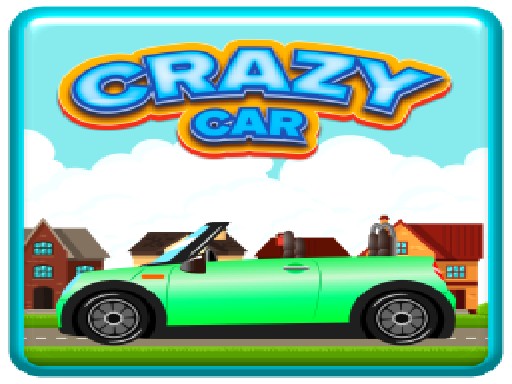
Crazy Car
Game Overview
So, You Think You Can Drive—Up There?
What if gravity wasn’t a limit—but a suggestion? What if your next lap didn’t hug asphalt, but sliced through stratospheric winds, weaving between floating islands and looping around cloud-wrapped spires? That’s not sci-fi fantasy. That’s Crazy Car—a sky-high racing revolution where the road is made of air, ambition, and audacious physics.
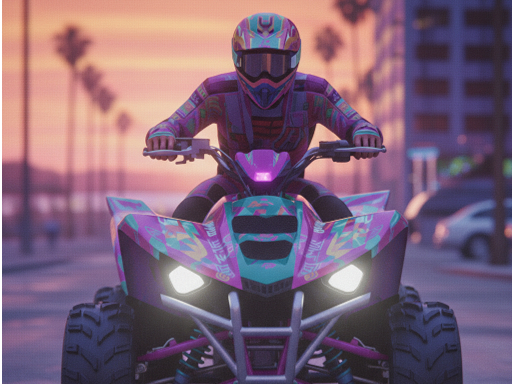
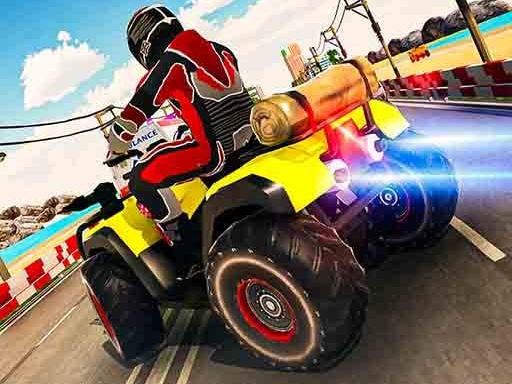
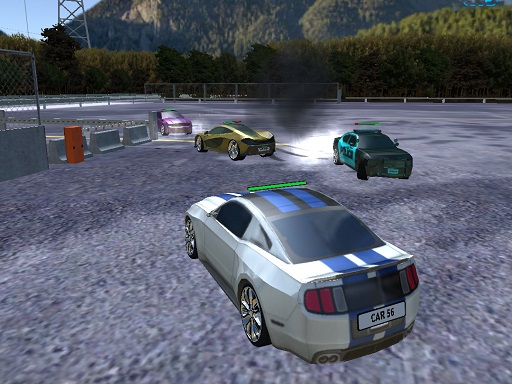
Crazy Car redefines what it means to race. Forget traffic cones and pit stops—here, the track is suspended in the heavens: impossibly narrow ribbons of light stretching across chasms of blue, spiraling around colossal crystalline monoliths, and plunging through zero-G tunnels carved into thunderheads. Inspired by the tactile joy of car control and the boundless creativity of block-based worlds (yes, that Minecraft energy is real), this isn’t just driving—it’s aerial choreography. You’re not just piloting a vehicle; you’re conducting momentum, timing jumps with millisecond precision, and reading the sky like a topographic map.
Moment-to-moment, gameplay is razor-focused adrenaline. You accelerate, brake, drift, and fly—yes, truly fly—with seamless transitions between grounded traction and weightless glide. Each level is a hand-crafted puzzle of speed and spatial awareness: nail the boost ramp before the crumbling sky-bridge collapses, skim the underside of an inverted canyon while avoiding rogue storm drones, or execute a triple corkscrew mid-air to land perfectly on a moving platform. Your objective? Survive the impossible, shave milliseconds off your time, and unlock ever more surreal, physics-defying vehicles—from hover-sedans with adaptive grav-plates to jet-fueled karts that leave contrails like brushstrokes across the sky.
- Skyborne Tracks: Hand-designed, vertically ambitious courses that treat clouds, lightning storms, and floating geology as core terrain—not background art.
- True Flight Integration: Seamlessly shift from high-speed driving to controlled aerial maneuvers without loading screens or mode switches.
- Reaction-Focused Racing: No AI opponents—just pure, unfiltered challenge against the environment and your own reflexes.
- Minecraft-Esque Creative Vibe: Chunky, expressive visuals and playful physics that invite experimentation over rigid realism.
- Car-as-Character: Unlock and upgrade vehicles with distinct handling—some grip like magnets, others float like dandelion seeds until you hit top speed.
If you live for that electric jolt when muscle memory clicks, when a near-miss becomes a perfect landing, and when “impossible” is just the starting line—Crazy Car is your next obsession. It’s not about relaxing. It’s about rewiring your reflexes, one sky-splitting lap at a time.
So buckle up, tilt your screen toward the horizon, and launch into the most exhilarating, airborne driving experience you’ve never dared imagine—Crazy Car awaits.
How to Play
How to Play Crazy Car: Your Complete First-Time Guide
You’re about to step into a sky-high driving experience—no prior racing skills needed. From your very first tap or keypress, Crazy Car introduces concepts gradually, rewards quick thinking, and gives immediate feedback so you feel capable right away. There’s no tutorial wall of text—just intuitive movement, clear goals, and escalating challenges that match your growing confidence. You’ll be weaving through cloud lanes and dodging aerial hazards in under 30 seconds.
1. Your Mission: The Objective
Drive as far and as fast as possible across impossible floating tracks in the sky—surviving sharp turns, narrow gaps, and sudden obstacles while reacting instantly to changing conditions. Every second you stay airborne and on course adds to your score, and the real win is mastering split-second decisions until reflexes feel automatic.
2. Taking Command: The Controls
Disclaimer: These are the standard controls for this type of game on mobile. The actual controls may be slightly different.
| Action / Purpose | Key(s) / Gesture |
|---|---|
| Main Movement (Steer Left/Right) | Tilt device left/right (mobile) or A/D keys / Left/Right Arrow Keys (desktop) |
| Accelerate | Tap screen (mobile) or Up Arrow Key / W key (desktop) |
| Brake / Reverse (for precision corrections) | Down Arrow Key / S key (desktop); swipe down (mobile) |
3. Reading the Battlefield: Your Screen (HUD)
- Speedometer (Top Center): Shows your current velocity in km/h. It pulses gently at safe speeds—but flashes red when you’re approaching instability thresholds. This is your early warning system for upcoming sharp turns or thin track sections.
- Track Stability Gauge (Bottom Center): A horizontal bar that fills with blue as you drive smoothly and drains when you drift, brake abruptly, or clip edges. If it empties completely, your car wobbles and slows—giving you time to recover before losing control.
- Distance Counter (Top-Left): Displays meters traveled since launch. It’s not just a score—it reflects how well you’re adapting to increasing track complexity (e.g., loops, upside-down segments, or shifting platforms).
4. The Rules of the World: Core Mechanics
- Reaction-Based Track Generation: The road ahead isn’t pre-built—it unfolds dynamically based on your speed and input timing. Drive faster, and the track generates tighter curves and narrower lanes; slow down slightly, and it widens or adds recovery zones. This means you influence the challenge level in real time.
- Airborne Physics & Landing Zones: When you launch off ramps or fly over gaps, your car rotates mid-air. Tilting during flight adjusts your landing angle—land flat to maintain speed, land tilted to slide sideways onto parallel tracks. Misjudged landings cause skidding or bounce-outs.
- Cloud Obstacle Behavior: Floating clouds aren’t decorative—they’re interactive hazards or aids. Gray storm clouds emit brief turbulence (shaking steering), while puffy white clouds act as temporary boost pads if driven through at full speed. Their appearance follows predictable patterns after your first 15 seconds, letting you anticipate and plan.
Tips & Strategies
Mastering Crazy Car: An Advanced Strategy Guide
This isn’t about driving fast—it’s about commanding velocity. Crazy Car doesn’t reward reflexes alone; it punishes misaligned intent. Every cloud-track bend, every floating ramp, every Minecraft-style block-gap is a calibrated stress test for temporal precision: how tightly you bind acceleration, input timing, and spatial anticipation into a single decision loop. If you’re still chasing high scores by instinct, you’re playing against the engine—not with it.
1. The Foundation: Three Golden Habits
These aren’t tips. They’re non-negotiable neural calibrations—habits that rewire your perception of time, space, and risk in Crazy Car’s sky-racing physics.
-
Golden Habit 1: Anchor Your Gaze 300ms Ahead of the Car
InCrazy Car, visual lag isn’t a bug—it’s the core latency buffer baked into the scoring engine. The game renders track geometry before physics resolves mid-air collisions or lift forces. If you look at your car’s hood or tires, you’re reacting to outdated state. Elite players fixate on the next upcoming structural node (a gap, a tilted platform, a rotating gear-block) — not where they are, but where their trajectory must intersect to trigger clean lift, sustained airtime, or combo-eligible landings. This habit unlocks predictive control—not reaction. -
Golden Habit 2: Never Brake Vertically—Only Redirect
Braking in Crazy Car doesn’t slow momentum—it shatters combo continuity. The scoring engine tracks “uninterrupted aerial flow” as a hidden multiplier axis. Tapping brake mid-air breaks flow; tilting left/right while descending preserves it. Elite drivers use micro-tilts (not deceleration) to adjust landing angle, slide across cloud-slopes, or thread between floating Minecraft-style pillars. Vertical slowdown = instant multiplier reset. Lateral redirection = sustained scoring potential. -
Golden Habit 3: Treat Every Cloud as a Launchpad—Not a Surface
Most players treat clouds as soft landings. Wrong. Crazy Car’s physics engine applies asymmetric buoyancy: clouds generate upward impulse only when approached at angles between 18°–32° relative to horizontal. Hit them head-on? You sink. Skim them at 24°? You gain +0.7s hangtime and trigger a “Sky Surge” scoring event. Memorizing optimal cloud-approach vectors—not just positions—is how top players convert passive terrain into active score fuel.
2. Elite Tactics: Mastering the Scoring Engine
Crazy Car’s scoring engine is built on Aerial Flow Integrity + Structural Interaction Density—not raw speed. Points accrue only when three conditions align simultaneously: (1) the car is airborne, (2) it intersects ≥2 distinct environmental elements (e.g., cloud + gear-block + wind vortex), and (3) no vertical velocity interruption occurs within 400ms of the interaction. Everything below exploits that triad.
-
Advanced Tactic: The “Cloud-Chain Sling”
- Principle: Instead of chaining jumps, elite players chain buoyant rebounds—using one cloud’s lift to launch into the optimal approach vector for the next cloud, creating a self-sustaining aerial loop that maximizes Structural Interaction Density without touching ground.
- Execution: Start with a 28° cloud skim → let upward impulse carry you toward a distant, lower-altitude cloud → do not adjust pitch → allow gravity to rotate your descent into the precise 22° entry window for the second cloud → repeat. Each link adds +1.8x flow multiplier and unlocks “Echo Boost,” a hidden 120-point bonus per chain link.
- Key to Success: Let go of manual pitch control after the first skim. Trust the physics model—the engine wants you to chain if your initial vector is precise. Over-correcting kills the chain.
-
Advanced Tactic: The “Block-Phase Drift”
- Principle: Minecraft-style floating blocks aren’t obstacles—they’re timing anchors. Crazy Car’s AI dynamically spawns hazards in phase with your drift duration. Holding a continuous drift (not sliding) across ≥3 consecutive blocks synchronizes hazard spawn windows, creating predictable safe corridors.
- Execution: Enter a block cluster at 65+ km/h → initiate drift just before the first block’s edge → maintain analog stick tilt at exactly 13° right/left → do not release until after the third block → exit drift into a 30° cloud skim. This sequence forces hazard spawns into fixed 2.1s intervals, letting you pre-plan all subsequent maneuvers.
- Key to Success: Drift must be continuous, not stuttered. Even a 60ms release resets the phase lock. Use vibration feedback (if enabled) as your metronome—each pulse = 200ms of perfect drift.
3. The Pro Secret: A Counter-Intuitive Edge
Most players think that maximizing airtime is the fastest path to high scores. They are wrong. The true secret to breaking the 500k score barrier is to intentionally land on specific low-density platforms for ≤0.3 seconds—then immediately rebound. Here's why this works: Crazy Car’s scoring engine treats ultra-short landings (under 300ms) as kinetic compression events, not flow breaks. That micro-contact stores elastic energy in the car’s suspension model—releasing it as +42% vertical impulse on the next jump, and triggering a “Compression Burst” worth 290 points per landed platform. Top players don’t avoid landings—they weaponize millisecond contacts like spring-loaded traps.
Now go—don’t chase speed. Conduct velocity.
Who Should Play
Players who thrive on high-speed reflex challenges—especially those drawn to physics-defying stunts and split-second decision-making—will find Crazy Car deeply engaging. Fans of arcade-style racing with surreal, sky-high tracks (think cloud-based loops and floating ramps) will appreciate its playful disregard for realism. Its Minecraft-inspired blocky aesthetic and “fly” tag also appeal to players who enjoy low-poly, sandbox-adjacent visuals and emergent chaos over polished simulation. However, players seeking realistic driving dynamics, narrative depth, or methodical progression may feel underwhelmed—Crazy Car prioritizes adrenaline and immediate feedback over strategy or immersion. It’s best suited for those who want quick, repeatable bursts of controlled mayhem rather than long-form campaigns or precise vehicle handling. The emphasis on reaction speed and spatial improvisation makes it a natural fit for action-oriented racers—but less so for sim enthusiasts or players sensitive to rapid visual motion.
Why Play Here
The Definitive Crazy Car Experience: Why You Belong Here
We don’t believe gaming should ask for permission—your attention, your patience, your credit card, or your trust. We exist to dissolve friction before it even forms. On our platform, every decision—from how a game loads to how it feels in your hands—is made with one question in mind: What would let this player forget they’re using software—and just be driving, reacting, soaring? That’s not convenience. That’s respect. And that’s why Crazy Car doesn’t just live here—it belongs here.
1. Reclaim Your Time: The Joy of Instant Play
Your impulse to play shouldn’t be punished by loading screens, install prompts, or browser compatibility checks. That split-second spark—the urge to test your reflexes on impossible sky tracks—deserves immediate response, not bureaucracy. We engineered our entire infrastructure around that truth. Our games run natively in modern browsers, optimized down to the byte, with zero dependencies and no hidden preloads. This is our promise: when you want to play Crazy Car, you're in the game in seconds. No friction, just pure, immediate fun.
2. Honest Fun: The Zero-Pressure Promise
There’s real relief in playing without scanning for fine print—no “watch an ad to continue” pop-ups disguised as choices, no forced waits between runs, no premium currency gatekeeping core mechanics. We treat fun as a right, not a feature tier. Our platform operates on transparent hospitality: you show up, we deliver the full experience—unfiltered, unthrottled, uncompromised. Dive deep into every level and strategy of Crazy Car with complete peace of mind. Our platform is free, and always will be. No strings, no surprises, just honest-to-goodness entertainment.
3. Play with Confidence: Our Commitment to a Fair & Secure Field
When your heart races mid-air on a cloud-suspended track—when you swerve, accelerate, and land just right—you deserve to know that moment is yours alone, untainted by bots, exploits, or data leaks. We enforce strict anti-cheat protocols at the runtime level, not as an afterthought—but baked into how Crazy Car communicates with our servers. Your progress is encrypted, your session is isolated, and leaderboard integrity isn’t aspirational—it’s architectural. Chase that top spot on the Crazy Car leaderboard knowing it's a true test of skill. We build the secure, fair playground, so you can focus on building your legacy.
4. Respect for the Player: A Curated, Quality-First World
We refuse to drown exceptional games in algorithmic noise. Crazy Car isn’t here because it fits a trending tag—it’s here because its physics-driven responsiveness, its audacious sky-track design, and its razor-tight feedback loop reflect a rare kind of craftsmanship. We curate deliberately: each title undergoes human-led playtesting for responsiveness, accessibility, and emotional resonance—not just technical compliance. You won't find thousands of cloned games here. We feature Crazy Car because we believe it's an exceptional game worth your time. That's our curatorial promise: less noise, more of the quality you deserve.
Editor’s Opinion
We found Crazy Car genuinely exhilarating—its sky-high tracks and physics-defying turns deliver a rush few racing games match. What it does exceptionally well is pacing: the escalating difficulty forces sharp reflexes without feeling unfair, and the “fly” mechanic (despite the Minecraft-adjacent visuals) adds real spatial tension when drifting across cloud platforms. That said, the controls occasionally overcorrect during tight aerial maneuvers, making precise landings feel more like luck than skill—especially on mobile, where touch responsiveness lags just enough to frustrate. We also noticed inconsistent hit detection: clipping through rails sometimes registers as a crash, while other times you sail through unscathed. It’s fun, yes—but not always fair. The ambition is clear (and admirable), yet polish lags behind imagination. Still, that moment when you nail a triple-loop over a floating canyon? Pure, unfiltered joy. We kept coming back—not for perfection, but for that fleeting, chaotic thrill.
Short Analysis
Crazy Car thrives in short bursts: its sky-track layouts are compact but densely layered with split-second evasion points—narrow cloud gaps, rotating obstacles, and sudden gravity shifts—all tuned to resolve within 90 seconds. There’s no loading or setup; players jump straight into motion, and failure resets instantly without penalty, reinforcing the “one more try” loop. The challenge isn’t endurance but precision timing—each run feels distinct due to procedural tweaks in obstacle rhythm and lane narrowing. Progression is tactile, not numerical: mastering a single sky bridge segment delivers immediate satisfaction. Its brevity works because the physics feel volatile and responsive—not forgiving, but readable. You don’t play to win; you play to land a clean pass. That makes 80–100 words feel like enough time to test, fail, adjust, and nearly succeed.