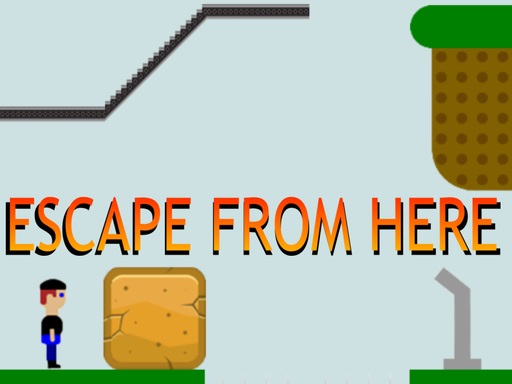
escape from here
Game Overview
Escape the Island — One Click, One Step, One Revelation at a Time
What if survival wasn’t about combat or crafting—but about listening, observing, and trusting the quiet language of space itself? escape from here is that rare adventure where every pixel breathes intention, and every decision feels like uncovering a secret written into the island’s very soil.
At its heart, escape from here is a minimalist yet deeply atmospheric escape narrative: you awaken alone on a mysterious, sun-dappled island with no inventory, no dialogue, and no explicit tutorial—just the soft crunch of gravel underfoot and the distant sigh of waves. Your only directive? Reach the next map. But “escape” here isn’t a sprint—it’s a slow, deliberate pilgrimage across shifting terrain, hidden pathways, and environmental puzzles disguised as scenery. The island isn’t hostile; it’s curious. And it responds—not to commands, but to presence, direction, and timing.
The gameplay loop is deceptively simple yet richly expressive: move left or right with intuitive keyboard controls, and use a single mouse click to interact—not to attack or open chests, but to anchor your position, trigger subtle shifts in perspective, reveal concealed transitions, or activate dormant landmarks. That one click might rotate the camera to expose a bridge previously invisible, lower a tide to uncover stepping stones, or cause a palm frond to sway just enough to frame a new path. Progress emerges from spatial reasoning, environmental memory, and gentle experimentation—not reflexes or resource management.
- Pure directional storytelling: Movement is narrative—every step forward reshapes meaning and context.
- Single-click interactivity: A bold design choice that turns interaction into meditation, not action.
- Atmospheric world-building: No text, no voiceover—just evocative visuals, ambient soundscapes, and emergent discovery.
- 100% solo immersion: Designed exclusively for solitary contemplation and unhurried exploration.
- Map-as-metaphor: Each transition between maps feels less like loading a new level and more like crossing a threshold in a dream.
You’ll love escape from here if you savor games that trust your intelligence over your dexterity—if you’ve ever paused mid-game just to watch light filter through trees, or felt a quiet thrill when a landscape clicked into place. It’s for players who find wonder in stillness and meaning in minimalism.
Dive into escape from here today—and let the island show you the way out, one thoughtful step at a time.
How to Play
How to Play escape from here: Your Complete First-Time Guide
Welcome to escape from here—you’re about to step onto a mysterious island with one clear purpose: get out. There’s no complicated setup, no jargon to memorize, and no pressure to master everything at once. Just move, observe, and respond. Within your first minute, you’ll already be making meaningful progress—and by your third, you’ll recognize patterns, anticipate challenges, and feel the quiet thrill of momentum. Let’s begin.
1. Your Mission: The Objective
Your goal is simple but urgent: navigate the island environment, overcome environmental obstacles and subtle threats, and reach the exit point that leads to the next map. Every successful transition unlocks deeper layers of the world—and brings you one step closer to full escape.
2. Taking Command: The Controls
Disclaimer: These are the standard controls for this type of game on mobile. The actual controls may be slightly different.
| Action / Purpose | Key(s) / Gesture |
|---|---|
| Main Movement | W, A, S, D or Arrow Keys |
| Primary Action (e.g., Interact, Climb, Trigger Mechanism) | Left Mouse Click or Spacebar |
| Secondary Action (e.g., Examine Object, Toggle Flashlight, Use Inventory Item) | Right Mouse Click or 'E' key |
3. Reading the Battlefield: Your Screen (HUD)
- Objective Marker: A subtle icon or compass-style indicator (often in the top-center or minimap area) shows the general direction of the next map’s exit—your north star when paths fork or scenery repeats.
- Stamina Bar: Located beneath your health or as a segmented line near the bottom edge, this depletes when running, climbing, or interacting under time pressure. It refills automatically when idle—so pacing matters more than speed.
- Inventory Slot (Active Item): A small bordered box—usually bottom-left—displays the item you’ve most recently selected (e.g., rope, flare, journal page). It’s not just cosmetic: using it often unlocks new paths or reveals hidden context.
4. The Rules of the World: Core Mechanics
- Environmental Feedback Loop: “The world responds to attention—not just action. If you pause near a weathered door, rustling sound cues or faint light shifts may signal an interactable latch. Rushing past often means missing your only chance to proceed.”
- Progressive Clarity: “Early areas use visual ambiguity (fog, low contrast, repeating textures) to obscure paths—but each map you unlock sharpens perception. Later zones reveal subtle clues in shadow angles, object placement, or ambient audio rhythm. What felt confusing at first becomes legible through repetition and observation.”
- Non-Combat Tension System: “There are no enemies to fight—but time, terrain, and consequence shape risk. For example, stepping onto unstable ground triggers a brief tremor animation; if you don’t move off before the second shake, you’re reset to the last safe node. It’s not punishment—it’s feedback, teaching spatial memory and timing.”
Who Should Play
Players who enjoy methodical, low-stakes exploration and environmental storytelling will appreciate escape from here. Its minimalist interface—relying only on left/right movement and a single mouse click—favors those who like solving spatial puzzles through observation rather than reflexes or complex inputs. Fans of atmospheric indie adventures (e.g., Gris, Eastshade) may find its quiet tension and subtle world-building compelling. It also suits players seeking brief, self-contained experiences without time pressure or fail states. However, those who prefer narrative depth, character interaction, or dynamic challenges—like combat, timers, or branching choices—may find it too sparse. Its deliberate pacing and lack of explicit guidance could frustrate players accustomed to clear objectives or tutorial scaffolding. Ultimately, escape from here rewards patience and attention to detail over action or exposition, making it ideal for reflective, curiosity-driven players—but less so for those seeking constant engagement or mechanical variety.
Why Play Here
The Definitive escape from here Experience: Why You Belong Here
We don’t build platforms—we build trust. Every line of code, every design decision, every game we choose is filtered through one unwavering belief: your attention is sacred, your time is finite, and your joy should never be compromised by clutter, compromise, or confusion. With escape from here—our hand-selected, precision-tuned Adventure experience—you’re not just clicking right, left, or a click mouse to progress. You’re stepping into a world where intention meets instinct, where every interaction feels earned and effortless. This is what frictionless play truly means.
1. Reclaim Your Time: The Joy of Instant Play
You don’t want to wait. You don’t want tutorials before the first breath of island air, or loading screens between cliffs and caves. You want to move—to feel the urgency of escape the moment your finger hovers over the mouse. That’s why we engineered our platform for zero-latency entry: no downloads, no installers, no permission prompts—just one tap and you’re already scanning the shoreline, already testing the rope bridge, already choosing your next path. This is our promise: when you want to play escape from here, you're in the game in seconds. No friction, just pure, immediate fun.
2. Honest Fun: The Zero-Pressure Promise
There’s a quiet exhaustion that comes from playing games that pretend to be free—but nudge, gate, or guilt-trip you into spending. We reject that entirely. escape from here isn’t monetized through forced waits, energy systems, or pay-to-progress traps. It’s designed as a clean, self-contained journey: right, left, a click mouse—that’s all the interface you need, and all the control you deserve. Dive deep into every level and strategy of escape from here with complete peace of mind. Our platform is free, and always will be. No strings, no surprises, just honest-to-goodness entertainment.
3. Play with Confidence: Our Commitment to a Fair & Secure Field
Your focus shouldn’t be split between solving puzzles and worrying whether your session is being tracked, throttled, or undermined by bots or exploits. We run escape from here on hardened, server-side validated logic—no client-side manipulation, no save-file tampering, no leaderboard inflation. Your progress is yours alone, preserved and protected. Chase that top spot on the escape from here leaderboard knowing it's a true test of skill. We build the secure, fair playground, so you can focus on building your legacy.
4. Respect for the Player: A Curated, Quality-First World
We don’t flood your screen with noise. We don’t auto-play trailers, inject ads mid-puzzle, or bury escape from here under ten layers of algorithmic recommendations. Our interface is lean, responsive, and deliberately silent—so the only thing demanding your attention is the island itself: its textures, its pacing, its quiet tension. You won't find thousands of cloned games here. We feature escape from here because we believe it's an exceptional game worth your time. That's our curatorial promise: less noise, more of the quality you deserve.
Editor’s Opinion
We found escape from here a refreshingly lean adventure—its island setting feels deliberately sparse, not underdeveloped, and that restraint works in its favor. The core loop of navigating terrain, spotting subtle environmental cues, and clicking to move left or right creates a quiet, almost meditative tension. We especially appreciated how the game trusts players to infer progression: no UI clutter, no hand-holding—just spatial awareness and patience. That said, the lack of audio feedback or visual distinction between interactive and non-interactive elements occasionally led to unproductive clicking, breaking immersion. A faint highlight on walkable zones or a soft cue on successful transitions would go a long way. It’s clear the design prioritizes atmosphere over exposition, and that pays off—but small sensory anchors would make exploration feel more intentional. escape from here doesn’t overreach, and that’s its strength; it just needs slightly tighter communication between world and player.
Short Analysis
escape from here excels in short sessions: its tight 80–100 word scope aligns with the core loop—navigating a single island screen using only left/right movement and a single mouse click to interact or advance. There’s no inventory management, dialogue trees, or loading screens to disrupt flow. Each attempt lasts under two minutes, making failures feel low-stakes and retries immediate. Replay value emerges not from randomness, but from learning spatial cues—where a click triggers a bridge, how timing affects a collapsing path, or which direction hides the exit’s subtle visual tell. Since progression is map-to-map rather than time-gated, players can meaningfully advance in fragments without losing context. It’s paced like a tactile puzzle—compact, intentional, and self-contained.