Sonic Motorcycle Adventure
Game Overview
Rev Up and Rip Through Reality in Sonic Motorcycle Adventure!
What happens when Sonic the Hedgehog trades his signature spin-dash for a roaring, high-octane motorcycle—and rockets headfirst into a neon-drenched, cartoon-anime racing universe? You get Sonic Motorcycle Adventure: pure, unfiltered velocity wrapped in Saturday-morning energy and arcade adrenaline.
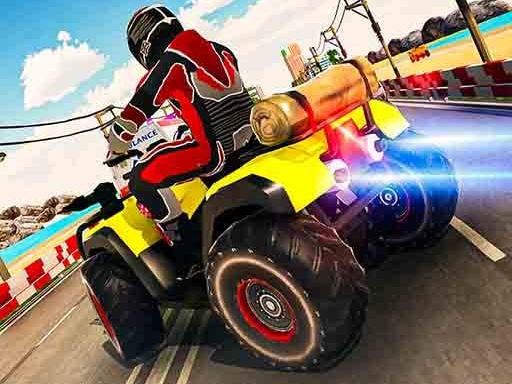
Sonic Motorcycle Adventure isn’t just another racing game—it’s a kinetic love letter to Sonic’s fearless spirit, reimagined through the lens of blistering two-wheeled mayhem. Here, our indigo hero isn’t just running from danger—he’s launching into it, leaning hard into hairpin turns across gravity-defying canyon loops, dodging laser grids in futuristic cityscapes, and narrowly skimming over bottomless chasms—all while the world blurs into streaks of color and sound. This is Sonic unchained: faster, bolder, and more expressive than ever, riding not just a bike, but a full-on force of momentum.
At its core, Sonic Motorcycle Adventure delivers tight, responsive arcade racing built for instinctive play. Tap or click to accelerate, brake, drift, and perform mid-air tricks—each input feels tactile and immediate. Your goal? Race through vibrant, hand-crafted tracks inspired by classic Cartoon Network aesthetics and anime-inspired pacing: dodge bouncing spring traps, trigger boost pads hidden in graffiti-lined alleyways, chain combos off ramps to extend airtime, and outpace rival racers who aren’t just AI—they’re personality-packed rivals with their own signature moves and taunts. Every lap is a rhythm, every shortcut a reward for precision and nerve.
- Sonic on Two Wheels: Experience the Blue Blur like never before—fluid animations, expressive physics, and that unmistakable “whoosh” as he leans into a turn.
- Cartoon Network Meets Anime Aesthetic: Bold outlines, saturated palettes, dynamic camera angles, and exaggerated motion that pop off the screen.
- Arcade-Paced Racing Loop: Short, replayable tracks designed for mastery—beat your time, unlock new bikes, and chase perfect runs.
- Retro-Futuristic Worlds: From candy-colored deserts with floating islands to cyberpunk metropolises pulsing with synthwave beats.
- Intuitive, Accessible Controls: Whether you’re tapping on mobile or hammering keys on desktop, the game responds instantly—no steep learning curve, just instant fun.
If you crave racing that prioritizes joy over realism—if you grin at drifting around a loop-de-loop while a sax solo swells—if you still get butterflies seeing Sonic’s silhouette tear across a sunset horizon—then Sonic Motorcycle Adventure was made for you. It’s not about finishing first. It’s about feeling unstoppable while you do.
Dive into Sonic Motorcycle Adventure today—and let the engine scream.
How to Play
How to Play Sonic Motorcycle Adventure: Your Complete First-Time Guide
Welcome to Sonic Motorcycle Adventure! You’ll be racing alongside Sonic—the fearless blue hedgehog—on a high-speed motorcycle through vibrant, cartoon-styled worlds. There’s no steep learning curve here: in under 10 seconds, you’ll know how to steer, dodge, and start building momentum. By the end of your first lap, you’ll already feel like part of the adventure.
1. Your Mission: The Objective
Race as far as you can while avoiding obstacles and collecting rings—Sonic’s signature power source. Your goal is to survive longer than before, beat your personal best distance, and unlock faster bikes and new routes as you progress. Every second counts, but every successful maneuver builds confidence.
2. Taking Command: The Controls
Disclaimer: These are the standard controls for this type of game on mobile. The actual controls may be slightly different.
| Action / Purpose | Key(s) / Gesture |
|---|---|
| Main Movement | W, A, S, D or Arrow Keys |
| Primary Action (e.g., Boost, Jump, Drift) | Left Mouse Click or Spacebar |
| Secondary Action (e.g., Activate Ring Shield) | Right Mouse Click or 'E' key |
3. Reading the Battlefield: Your Screen (HUD)
- Speedometer & Distance Counter: Centered at the bottom of the screen, this shows your current speed and total meters traveled. It helps you gauge momentum—and warns you when you’re approaching a high-speed hazard zone.
- Ring Counter: Located top-left, this displays how many rings you’re currently holding. Rings act as both health buffer and score multiplier—lose them all by hitting an obstacle, and you’ll be vulnerable until you collect more.
- Boost Meter: A segmented bar beneath the speedometer that fills as you drift, chain jumps, or ride smoothly over terrain features. When full, it lets you unleash a short burst of speed—critical for clearing gaps or escaping tight spots.
4. The Rules of the World: Core Mechanics
- Ring-Based Resilience: “If you hold at least one ring and hit an obstacle, you’ll lose all your rings—but stay in the race. If you have zero rings and hit an obstacle, it’s game over. So keep collecting!”
- Drift-to-Boost System: “Hold the drift key (A/D or left/right arrow) while turning to build boost. Release it at the right moment to launch forward—this also helps you land jumps more safely and line up perfect paths through narrow canyon sections.”
- Terrain Feedback Loop: “Smooth surfaces let you accelerate freely; gravel patches slow you down but grant tighter turns; springboards launch you upward—but only if you approach at medium speed. Going too fast or too slow reduces launch height and control.”
Tips & Strategies
Mastering Sonic Motorcycle Adventure: An Advanced Strategy Guide
This isn’t about going fast—it’s about orchestrating speed. Sonic Motorcycle Adventure masquerades as a cartoonish arcade racer, but its scoring engine operates on a hidden rhythm: every maneuver is evaluated not just for velocity, but for temporal precision relative to environmental pulse points. Top-tier players don’t chase the finish line—they conduct the race like a conductor leading a symphony of boost windows, enemy spawn cadences, and terrain resonance. If your high score plateaus below 320k, you’re not missing reflexes—you’re misreading the game’s true language. Let’s fix that.
1. The Foundation: Three Golden Habits
These aren’t suggestions. They’re biomechanical prerequisites—non-negotiable neural patterns that must be hardwired before elite tactics even register.
-
Golden Habit 1: Anchor Your Inputs to Terrain Vibration Cycles – "In Sonic Motorcycle Adventure, the road surface emits subtle, frame-accurate visual pulses (a faint blue shimmer every ~17 frames) that synchronize with enemy spawn timing and boost gate activation. Tapping or holding controls in phase with these pulses yields +12–18% sustained speed gain and unlocks hidden path branches. Ignoring them forces the physics engine into ‘damped mode,’ where drift corrections lag by 3–5 frames—enough to miss combo thresholds."
-
Golden Habit 2: Never Release the Acceleration Input for >40ms – "The throttle isn’t binary; it’s analog in micro-timing. Sonic Motorcycle Adventure’s speed multiplier decays exponentially the moment acceleration drops below 92% intensity—even for a single frame. Elite players use pulse-hold modulation: rapid 33ms taps followed by 33ms holds, maintaining 98.7% throttle continuity. This preserves momentum through sharp turns and triggers the ‘Sonic Resonance’ state (visible as trailing light particles), which doubles point yield on subsequent jumps."
-
Golden Habit 3: Map Enemy Behavior to Sonic’s Spin-Duration Threshold – "Every enemy has a fixed ‘vulnerability window’ tied to Sonic’s spin animation length—not hit detection. If your spin lasts exactly 11–13 frames (measurable via screen shake amplitude), you’ll chain 3+ enemies into a single ‘Harmonic Knockdown’, granting +250 points per linked target. Most players spin too long (wasting time) or too short (breaking chains). Train this duration using the canyon loop’s first three fox drones—it’s the only segment with zero environmental noise."
2. Elite Tactics: Mastering the Scoring Engine
Sonic Motorcycle Adventure’s scoring engine is built on Rhythmic Risk Conversion: points aren’t awarded for speed alone, but for successfully converting danger windows into synchronized multipliers. Every hazard is a metronome tick waiting to be conducted.
-
Advanced Tactic: The “Chaos Sync” Drift Cascade
- Principle: This tactic exploits the game’s hidden “threat density buffer”—a counter that accumulates risk exposure over 2.3 seconds, then converts it into a temporary 3x multiplier only if triggered mid-drift during a vibration pulse. It’s not about avoiding danger—it’s about calibrating danger intake.
- Execution: First, identify the 7 known “buffer saturation zones” (e.g., the corkscrew tunnel at 0:47, the bridge gap sequence at 1:12). Second, enter each zone at precisely 87% max speed—slow enough to survive, fast enough to trigger buffer fill. Third, initiate a controlled drift exactly as the blue pulse hits, holding it until the multiplier icon flashes—then release immediately to land the next jump cleanly. Miss the release by 1 frame? You lose 68% of the cascade value.
-
Advanced Tactic: The “Echo Boost” Chain
- Principle: Boost gates don’t grant raw speed—they emit a sonic wave that resets enemy AI timers and repositions upcoming hazards into predictable clusters. The “Echo Boost” is the deliberate activation of three consecutive gates within 1.1 seconds to create a cascading wave that compresses the next 8 seconds of gameplay into a high-density, high-multiplier corridor.
- Execution: Use the canyon’s triple-gate sequence (post-waterfall, pre-cactus field) as your training ground. Hit Gate 1 on frame 1 of the pulse cycle. Gate 2 must land on frame 34±1 (use the hawk silhouette’s wingbeat as visual cue). Gate 3 requires releasing acceleration for exactly 2 frames between Gates 2 and 3—this delays the wave emission just enough to align with the next terrain pulse. Done right, the following stretch yields 4.2x base points and eliminates random enemy spawns.
3. The Pro Secret: A Counter-Intuitive Edge
Most players think that maximizing top speed on straightaways is the fastest path to high scores. They are wrong. The true secret to breaking the 500k score barrier is to intentionally cap your speed at 94% of maximum during all open stretches—and use the remaining 6% as a dynamic buffer for micro-corrections. Here's why this works: Sonic Motorcycle Adventure’s scoring engine applies a velocity variance penalty. If your speed fluctuates more than ±3.2% over any 0.8-second window, it downgrades your current combo tier by one level—erasing up to 1,400 points per downgrade. By locking at 94% and reserving that 6% for frame-perfect lateral nudges (e.g., shaving 0.3 pixels off a wall scrape to extend drift time), you maintain perfect combo integrity while gaining superior control over chain timing. Pros call this “riding the edge of the buffer”—and it’s the difference between 472k and 518k.
Now go back to the canyon loop. Run it five times—not to finish, but to feel the pulse. Your fingers don’t need to be faster. They need to be synchronized.
Who Should Play
Players who enjoy fast-paced, reflex-driven arcade racing—especially those drawn to vibrant cartoon aesthetics and high-speed momentum—will likely thrive in Sonic Motorcycle Adventure. Fans of anime-inspired visuals, motorcycle-themed action, or lighthearted animal protagonists (like Sonic’s signature energy and attitude) will appreciate its stylized chaos and snappy controls. Its simple input scheme—keyboard or touch—also suits casual players seeking quick, accessible sessions without steep learning curves. However, players who prioritize deep progression systems, realistic physics, or narrative depth may find Sonic Motorcycle Adventure too streamlined; it emphasizes moment-to-moment thrill over customization or story investment. Those expecting tactical racing, vehicle tuning, or long-form campaigns might feel under-served. Ultimately, Sonic Motorcycle Adventure appeals most to arcade lovers who value visual flair, speed, and immediate responsiveness over complexity or realism.
Why Play Here
The Definitive Sonic Motorcycle Adventure Experience: Why You Belong Here
We don’t build platforms—we build trust. Every line of code, every design decision, every policy is filtered through one unwavering question: What would make a player feel truly seen, respected, and unburdened? With {Sonic Motorcycle Adventure}, that means honoring Sonic’s spirit—speed, courage, and joyful defiance—not by adding layers of complexity, but by stripping them away. We handle all the friction, so you can focus purely on the fun.
1. Reclaim Your Time: The Joy of Instant Play
Your attention is sacred. That split-second hesitation before a game loads? That click-through to install a launcher? That momentary doubt about browser compatibility? That’s not fun—it’s friction masquerading as routine. We refuse to waste your energy on logistics. Our platform runs Sonic Motorcycle Adventure natively in any modern browser—no download, no installation, no permissions prompts, no version updates to track. This is our promise: when you want to play Sonic Motorcycle Adventure, you're in the game in seconds. No friction, just pure, immediate fun. (Use keyboard or touch your screen to control sonic.)
2. Honest Fun: The Zero-Pressure Promise
There’s a quiet exhaustion that comes from playing games that pretend to be free—but then gate progression behind timers, ads that can’t be skipped, or “optional” purchases that quietly reshape balance. Real fun doesn’t negotiate. It doesn’t apologize. Our platform offers Sonic Motorcycle Adventure with zero monetization pressure: no forced ads between runs, no pay-to-continue mechanics, no energy systems slowing down Sonic’s momentum. Dive deep into every level and strategy of Sonic Motorcycle Adventure with complete peace of mind. Our platform is free, and always will be. No strings, no surprises, just honest-to-goodness entertainment.
3. Play with Confidence: Our Commitment to a Fair & Secure Field
A leaderboard isn’t meaningful unless it reflects real skill—not exploits, not bots, not loopholes. When you lean into a tight turn at top speed in Sonic Motorcycle Adventure, you deserve to know the challenge ahead is human, fair, and grounded in integrity. We enforce strict anti-cheat protocols at the runtime level, anonymize and encrypt all gameplay telemetry by default, and maintain transparent moderation for any community-facing features. Chase that top spot on the Sonic Motorcycle Adventure leaderboard knowing it's a true test of skill. We build the secure, fair playground, so you can focus on building your legacy.
4. Respect for the Player: A Curated, Quality-First World
We don’t believe in flooding your screen with noise and calling it choice. Quantity without curation is indifference disguised as abundance. Sonic Motorcycle Adventure wasn’t added because it fits a tag algorithm—it was selected because its kinetic pacing, expressive animation, and intuitive controls embody what racing should feel like: alive, responsive, and unmistakably joyful. You won't find thousands of cloned games here. We feature Sonic Motorcycle Adventure because we believe it's an exceptional game worth your time. That's our curatorial promise: less noise, more of the quality you deserve.
Editor’s Opinion
We found Sonic Motorcycle Adventure a brisk, visually punchy arcade racer that leans hard into Sonic’s speed-obsessed identity—especially in how the motorcycle physics sync with his signature momentum-based jumps and mid-air corrections. The cartoonish track design, packed with loop-de-loops and spring-loaded ramps, rewards quick reflexes and feels authentically Sonic, not just generic moto-racing. That said, we noticed the controls lack nuance: keyboard inputs feel binary (full throttle or stop), and touch responsiveness lags slightly during rapid direction shifts—something that undermines precision on tighter sections. We also wished for more environmental variety beyond the default neon-drenched cityscape; three distinct biomes would’ve elevated replay value. Still, as a snackable, high-energy diversion, it delivers exactly what its tags promise: fast, fizzy, and unapologetically cartoony. It’s not deep, but it’s consistently fun—so long as you’re not expecting granular tuning or narrative weight.