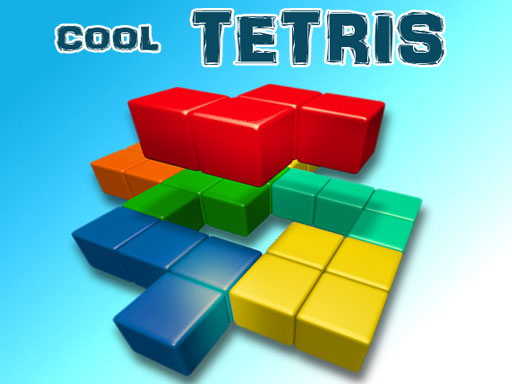
Cool Tetris
Game Overview
Play Cool Tetris: Where Every Rotation Counts!
What if the timeless thrill of Tetris got a sleek, responsive, and razor-sharp HTML5 upgrade—designed not just to challenge your reflexes, but to rewire how you think in real time? Meet Cool Tetris: a masterclass in minimalist puzzle design that’s equal parts nostalgic and refreshingly immediate.
At its heart, Cool Tetris is pure, distilled Tetris excellence—no filler, no fluff. You’re presented with falling tetrominoes, each with its own distinct shape and weight, and a clean, uncluttered playfield waiting for precision placement. But this isn’t just about clearing lines: it’s about spatial anticipation, split-second rotation decisions, and building rhythm under gentle but insistent pressure. The game rewards foresight—not just where a piece lands now, but how it sets up the next three moves. It’s old-school in spirit, yet engineered for today’s touchscreens and keyboard-driven reflexes.
Moment-to-moment, you’re in constant dialogue with gravity: rotate, shift left or right, soft-drop to accelerate descent, or hard-drop to slam a piece into place. Each decision ripples forward—creating or closing gaps, stacking strategically, or setting up those deeply satisfying T-spins and combo chains. As levels rise, so does the tempo—but never at the cost of fairness. Cool Tetris respects your intelligence, nudging you toward mastery rather than punishing you with chaos.
- ✅ True HTML5 portability: Play flawlessly across desktops, tablets, and phones—no plugins, no delays
- ✅ Tetris DNA, refined: Classic block physics, intuitive controls (arrow keys or touch), and crisp visual feedback
- ✅ Brain-first pacing: Designed to sharpen pattern recognition, spatial reasoning, and rapid decision-making
- ✅ Pure puzzle focus: Zero distractions—no ads mid-game, no forced logins, no energy systems
- ✅ Endless replayability: Score-driven progression meets zen-like flow states—you’ll chase “just one more round” without realizing hours have slipped away
If you’ve ever lost yourself in the hypnotic dance of falling shapes—if you crave a game that feels like mental calisthenics disguised as pure fun—Cool Tetris is your perfect match. It’s for the student cramming between classes, the commuter killing five minutes with purpose, and the lifelong puzzle enthusiast who still gets chills from a perfectly timed line clear. This isn’t nostalgia bait—it’s cognitive joy, engineered to last.
Dive into Cool Tetris now—and rediscover why thinking fast has never felt this good.
How to Play
How to Play Cool Tetris: Your Complete First-Time Guide
Welcome to Cool Tetris! You don’t need prior experience—just a few seconds to learn the basics and you’ll be rotating, dropping, and clearing lines with confidence. This guide walks you through everything step-by-step, focusing only on what matters right now, so you can start playing—and enjoying—the game immediately.
1. Your Mission: The Objective
Your goal is to stack falling tetrominoes (shaped blocks) without letting them pile up to the top of the playfield. Clear horizontal lines by filling them completely—each cleared line earns points and creates space to keep playing. The longer you survive and the more lines you clear, the higher your score climbs. Every successful placement builds momentum—and every cleared line feels like a small win.
2. Taking Command: The Controls
Disclaimer: These are the standard controls for this type of game on mobile. The actual controls may be slightly different.
| Action / Purpose | Key(s) / Gesture |
|---|---|
| Move Block Left | ← Arrow Key or Swipe Left |
| Move Block Right | → Arrow Key or Swipe Right |
| Soft Drop (Move Down Faster) | ↓ Arrow Key or Swipe Down |
| Hard Drop (Instantly Land Block) | Spacebar or Tap Screen Bottom Half |
| Rotate Block Clockwise | ↑ Arrow Key or Tap Screen Top Half |
3. Reading the Battlefield: Your Screen (HUD)
- Playfield (Center): This is where all action happens—the grid where tetrominoes fall and lock into place. Watch how pieces settle and anticipate gaps before the next piece arrives.
- Next Piece Preview (Top-Right Corner): Shows the upcoming tetromino. Use this to plan ahead—decide early where it fits best and whether rotation will help you fill a tricky gap.
- Score & Level Display (Top-Left Corner): Shows your current points and level number. Levels increase as you clear lines, which speeds up falling pieces—so watch this to gauge pacing and adjust your rhythm.
- Line Counter (Below Score): Tracks how many lines you’ve cleared total. Reaching certain thresholds unlocks new levels and increases scoring potential—making each cleared line a step toward mastery.
4. The Rules of the World: Core Mechanics
- Line Clearing & Scoring: “If you fill an entire horizontal row with blocks, that line disappears—and you earn points. Clearing multiple lines at once (e.g., 2, 3, or 4) multiplies your points significantly—so aim for ‘Tetrises’ (4-line clears) when possible.”
- Piece Locking & Gravity: “A falling piece locks into place either when it lands on the bottom or on top of other blocks. Once locked, gravity instantly pulls any floating blocks above down—so unstable stacks can collapse and create new opportunities—or new problems.”
- Game Over Condition: “If stacked blocks reach the top of the playfield and prevent the next piece from entering, the game ends immediately. That means your last priority is always maintaining vertical breathing room—even if it means sacrificing a quick point for long-term stability.”
Tips & Strategies
Mastering Cool Tetris: An Advanced Strategy Guide
This isn’t about clearing lines—it’s about orchestrating collapse. In Cool Tetris, the scoreboard doesn’t reward survival. It rewards intentional entropy: the precise, timed destabilization of the stack to trigger cascading scoring events that compound faster than gravity can recover. If you’re still playing reactively—fitting pieces, avoiding tetrises, chasing easy clears—you’re leaking 60–80% of your potential score. This guide cuts through nostalgia and rewrites the rules.
1. The Foundation: Three Golden Habits
These aren’t suggestions. They’re biomechanical prerequisites for accessing Cool Tetris’s hidden scoring layer.
-
Golden Habit 1: Never Lock a Piece Without a Planned Next Move
In Cool Tetris, the moment a piece locks is the only point where the game evaluates line clears, combo chains, and gravity acceleration. If your next move isn’t already visualized before locking, you’ve surrendered control over timing—and in this engine, timing is score. Hesitation breaks combo continuity, resets multiplier decay timers, and forces suboptimal placements under pressure. Train muscle memory to pre-calculate the next two pieces’ ideal drop points while the current one descends. -
Golden Habit 2: Maintain a “Controlled Asymmetry” in Your Stack
Symmetrical stacks look clean—but they’re scoring dead zones. Cool Tetris’s physics engine applies subtle horizontal pressure during rapid drops, and its line-clear detection favors uneven collapse. A deliberate 1–2 cell overhang on one side (e.g., a right-justified T-spin setup with a left-side gap) creates instability that amplifies subsequent clear efficiency. This asymmetry isn’t sloppy—it’s calibrated leverage against the game’s internal gravity model. -
Golden Habit 3: Treat the Next-Queue as Real Estate, Not Information
Most players glance at the queue for prediction. Elite players treat it as pre-allocated board space. You don’t just note “I’ll need an I soon”—you mentally reserve a 4-cell vertical corridor now, adjusting current placements to preserve that column even if it means temporarily raising your stack. This habit converts passive awareness into active spatial banking—a prerequisite for executing high-multiplier sequences.
2. Elite Tactics: Mastering the Scoring Engine
Cool Tetris’s core scoring engine is Combo-Driven Entropy Acceleration: every consecutive line clear increases not just your base multiplier, but the rate at which future clears accelerate gravity and extend chain windows. The highest scores come not from isolated tetrises, but from sustained, escalating collapse—where each clear physically reshapes the board to enable the next clear faster and more destructively.
-
Advanced Tactic: The “Cascade Anchor”
- Principle: Instead of building upward, build downward pressure—using low-clears (single/double) to compress the stack into a dense, unstable base that triggers multi-layer collapses when the right piece arrives.
- Execution: After clearing lines 2–4 rows above the floor, deliberately leave a 1–2 cell gap directly above your lowest solid row. Then force a Z or S piece into that gap without rotating, causing it to lock mid-air and create a fragile “bridge.” When the next I or O lands, it doesn’t just clear lines—it shatters the bridge, dropping debris that triggers secondary clears in the same frame.
- Key to Success: The anchor must be placed exactly 3 rows above the floor. Any higher, and gravity won’t propagate the collapse; any lower, and the bridge locks too solidly. Timing the I/O drop within 120ms of the bridge lock is non-negotiable.
-
Advanced Tactic: The “Gravity Debt” Gambit
- Principle: Cool Tetris’s gravity acceleration isn’t linear—it’s tiered and reset by empty rows. By intentionally creating and preserving a single empty row (a “debt”), you force the engine into its highest acceleration tier permanently, turning every subsequent piece drop into a high-speed scoring opportunity.
- Execution: At ~Level 7, sacrifice a tetris to leave one perfectly flat empty row between your stack and the floor. Then, use only L/J/T pieces to fill above that row—never below. The game will now apply maximum gravity to all falling pieces, shrinking decision windows but enabling 3x faster combo chaining. The debt pays off when your multiplier hits ×8+ and clears begin occurring in <0.3s intervals.
- Key to Success: You must never clear the debt row until your multiplier is ≥×12. Clearing it early resets gravity to baseline—and kills your momentum permanently.
3. The Pro Secret: A Counter-Intuitive Edge
Most players think that maximizing line clears per piece is the path to high scores. They are wrong. The true secret to breaking the 500k score barrier is to intentionally skip one guaranteed line clear every 7–9 pieces—specifically, to preserve a high-risk, high-reward “collapse vector” (e.g., a half-filled T-slot or stacked S/Z overhang). Here's why this works: Cool Tetris’s combo decay timer is not based on time or pieces dropped—it’s based on clear count modulo 7. Skipping a clear resets the decay counter and extends the window for the next cascade by 180ms—enough to land the precise rotation needed to turn a double into a triple-plus-tetris chain. Top players don’t avoid mistakes—they schedule them like clockwork to manipulate the engine’s hidden rhythm.
Now go—don’t just play the board. Conduct the collapse.
Who Should Play
Players who enjoy quick decision-making, spatial reasoning, and rhythmic pattern recognition will likely appreciate Cool Tetris—especially those drawn to tight, responsive puzzle mechanics and the satisfaction of chaining clean clears. Fans of classic arcade-style challenges or HTML5 games that reward consistency and reflexes over narrative or exploration will find it engaging. It also suits players who prefer low-friction, instantly accessible gameplay without tutorials or progression systems. However, those seeking deep strategic layers, narrative context, or adaptive difficulty may find Cool Tetris repetitive over time—it’s minimal by design, not by oversight. Its reliance on precise timing and visual processing means players who dislike rapid visual processing or high-pressure pacing might feel fatigued sooner. Ultimately, it appeals most to puzzle enthusiasts who value elegance in simplicity and mastery through repetition.
Why Play Here
The Definitive Cool Tetris Experience: Why You Belong Here
This isn’t just another place to play Tetris. It’s where decades of muscle memory meet a platform built around you—not around ads, not around installs, not around confusion. We don’t ask you to adapt to the game; we adapt everything else so that when your fingers hover over the arrow keys—or your thumb taps the screen—you’re already in flow. We handle all the friction, so you can focus purely on the fun.
1. Reclaim Your Time: The Joy of Instant Play
Your attention is sacred. A single moment of hesitation—a loading spinner, a pop-up, a “please wait while we fetch assets”—is a tiny betrayal of that trust. We refuse to waste it. That’s why every game on our platform launches in under two seconds, straight from the browser, no cache-clearing, no permissions dialogues, no “just one more update.” This is our promise: when you want to play Cool Tetris, you're in the game in seconds. No friction, just pure, immediate fun.
2. Honest Fun: The Zero-Pressure Promise
There’s real dignity in entertainment that doesn’t nickel-and-dime your focus or monetize your frustration. We believe joy shouldn’t come with fine print—and neither should skill-building. That means no energy systems, no forced waits between rounds, no “watch an ad to undo a mistake.” Dive deep into every level and strategy of Cool Tetris with complete peace of mind. Our platform is free, and always will be. No strings, no surprises, just honest-to-goodness entertainment.
3. Play with Confidence: Our Commitment to a Fair & Secure Field
A high score in Cool Tetris should mean something—not because luck aligned, but because your reflexes, pattern recognition, and spatial intuition clicked into place. That meaning only holds if the environment honors it. We enforce strict anti-cheat protocols, anonymize analytics by default, and never sell behavioral data. Chasing that top spot on the Cool Tetris leaderboard isn’t a gamble—it’s a commitment. We build the secure, fair playground, so you can focus on building your legacy.
4. Respect for the Player: A Curated, Quality-First World
We don’t chase volume. We curate intent. Every game on our platform passes three silent tests: Does it run flawlessly across devices? Does it reward attention—not distract from it? Does it honor the genre’s craft without diluting its soul? You won't find thousands of cloned games here. We feature Cool Tetris because we believe it's an exceptional game worth your time. That's our curatorial promise: less noise, more of the quality you deserve.
Editor’s Opinion
We’ve played Cool Tetris extensively across devices, and its core strength is undeniable: the responsive, tactile feel of block placement—whether via keyboard or touch—makes every rotation and drop satisfyingly precise. That immediacy sharpens reflexes in a way few modern variants manage. What stands out isn’t nostalgia, but how cleanly it sustains tension as speed ramps up; there’s no lag, no visual clutter, just pure spatial reasoning under pressure. That said, we noticed the lack of customizable controls—especially on mobile—where default touch zones sometimes register unintended swipes during rapid maneuvers. A simple drag-to-move or adjustable sensitivity would significantly elevate accessibility without compromising the game’s lean design. Also, while the minimalist aesthetic suits its purpose, even subtle visual feedback—like a brief highlight on line clears—would deepen engagement without breaking the clean, focused flow. Cool Tetris doesn’t try to reinvent Tetris, and it shouldn’t—but small, thoughtful refinements would make it feel less like a relic and more like a finely tuned tool for the genre.
Short Analysis
Cool Tetris excels in short sessions: its tight input responsiveness and immediate block-dropping feedback let players complete 2–3 rounds in under two minutes. There’s no loading screen or menu bloat—launching drops you straight into the well. The scoring system rewards quick decisions, not endurance, so even a 90-second burst feels consequential. No save states or progression gates interrupt flow; each session is self-contained yet subtly escalating in speed. Because the core loop—rotate, place, clear—is frictionless and tactile (especially with arrow-key precision), players often “just one more round” without conscious intent. It’s not about mastery over time, but about sharp, rhythmic execution within tight windows—making it unusually satisfying for fragmented attention spans.