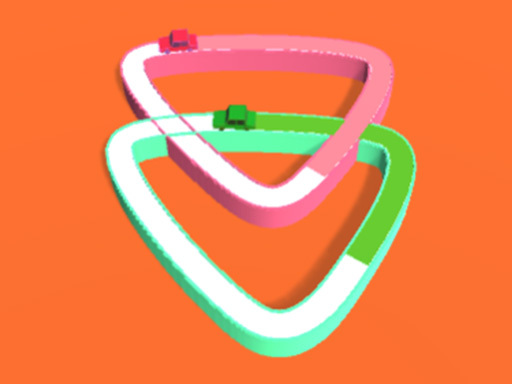
Cars Paint 3D
Game Overview
Paint, Puzzle, Perfect — Welcome to Cars Paint 3D!
What if solving a puzzle felt less like a test and more like watching a car transform under your fingertips? Cars Paint 3D isn’t just another tap-and-solve distraction — it’s a tactile, satisfying fusion of logic, color theory, and automotive charm that hooks you in seconds and keeps you coming back for just one more level.
At its heart, Cars Paint 3D is a brilliantly streamlined 3D puzzle experience where every level presents a partially painted car model suspended in clean, minimalist space. Your mission? Use logical deduction and spatial reasoning to determine exactly which panels need which colors — then click to apply them with precision. There are no timers, no penalties for missteps (just gentle visual feedback), and no complicated controls: just intuitive mouse-driven interaction that puts the focus squarely on your thinking. As you progress, puzzles evolve cleverly — introducing mirrored symmetry, multi-layered color constraints, and increasingly intricate vehicle silhouettes — all while maintaining that effortless, hypercasual flow.
What’s the Core Gameplay?
In Cars Paint 3D, you’ll spend your time rotating 3D car models, analyzing adjacent panels, testing hypotheses through simple clicks, and experiencing that unmistakable click of satisfaction when an entire vehicle snaps into perfect chromatic harmony. It’s part Tetris-like pattern recognition, part Rubik’s Cube-style logic, and wholly unique in how it turns automotive aesthetics into elegant mental gymnastics.
- True 3D Spatial Puzzling: Rotate, zoom, and inspect cars from every angle — perspective matters.
- Zero-Clutter Interface: Pure mouse control, no tutorials needed — learn by doing.
- Progressive Logical Depth: Early levels ease you in; later ones demand layered deduction and foresight.
- Car-Centric Creativity: Each solved vehicle feels like a tiny act of design — vibrant, cohesive, and proudly yours.
- Casual by Design, Addictive by Nature: Sessions last 60 seconds or 60 minutes — both feel equally rewarding.
Why will you love it? Because Cars Paint 3D speaks directly to the part of you that lines up cereal boxes by color, pauses mid-scroll to spot the odd tile in a pattern, or grins when a jigsaw piece drops perfectly into place. It’s ideal for logic lovers who crave clarity, art-minded players who appreciate form and function, and anyone needing a joyful, screen-filling mental reset — no pressure, no noise, just pure, polished problem-solving joy.
Dive into Cars Paint 3D today and repaint your expectations of what a puzzle game can be!
How to Play
How to Play Cars Paint 3D: Your Complete First-Time Guide
Welcome to Cars Paint 3D! You don’t need prior experience—just curiosity and a few seconds to get started. This is a calm, focused puzzle game where logic and observation matter more than speed or reflexes. Within your first 30 seconds, you’ll understand how to select colors, fill sections, and complete your first car. Let’s begin.
1. Your Mission: The Objective
Your goal is to fully paint each 3D car model by filling every visible surface with the correct color—no gaps, no overflows. Each level presents a partially colored car with numbered or patterned zones; you must deduce which color belongs where using logical constraints (e.g., adjacent zones can’t share the same color, or numbers indicate how many adjacent faces share that hue). Complete all zones correctly to advance.
2. Taking Command: The Controls
Disclaimer: These are the standard controls for this type of game on mobile. The actual controls may be slightly different.
| Action / Purpose | Key(s) / Gesture |
|---|---|
| Rotate the Car Model | Click and drag with Left Mouse Button |
| Select a Color from Palette | Left Mouse Click on a color swatch |
| Paint a Surface Zone | Left Mouse Click on an unpainted or miscolored zone |
| Undo Last Paint Action | Right Mouse Click or 'Z' key |
3. Reading the Battlefield: Your Screen (HUD)
- Color Palette Bar (bottom center): Displays available colors for the current level. Some levels restrict your palette—only these colors may be used. Watch for locked or grayed-out swatches indicating unavailable options.
- Zone Counter (top-left): Shows “X/Y” — how many surface zones you’ve painted correctly out of the total required. This is your real-time progress tracker and only increments when a zone matches its logical requirement.
- Level Indicator (top-center): Displays your current level number and star rating (0–3 stars), based on accuracy and move efficiency. Stars unlock bonus color themes later in the game.
4. The Rules of the World: Core Mechanics
- Adjacency Logic Rule: If two surface zones share an edge (not just a corner), they cannot be the same color—unless the level explicitly allows it (e.g., a “free paint” zone marked with a star icon). This is the foundational constraint driving every decision.
- Numbered Zone Rule: A number inside a zone tells you how many of its directly adjacent zones must be painted with the same color as that zone. For example, a “2” means exactly two neighbors must match its color—not more, not less.
- Undo Limit Rule: You can undo up to three moves per level—but each undo consumes one “Logic Token,” shown beside the zone counter. Tokens regenerate slowly over time or refill fully when you restart the level. Use them to test hypotheses, not to avoid thinking.
Tips & Strategies
Mastering Cars Paint 3D: An Advanced Strategy Guide
This isn’t a “how to play” tutorial—it’s a precision strike against the game’s hidden logic. Cars Paint 3D masquerades as a relaxed coloring puzzle, but beneath its glossy 3D car shells lies a ruthlessly deterministic scoring engine governed by pattern compression efficiency. Top players don’t just paint cars—they compress visual state transitions into minimal, high-yield actions. If you’re still chasing scores by reacting, you’re already losing before the first brushstroke.
1. The Foundation: Three Golden Habits
These aren’t suggestions. They’re biomechanical prerequisites for accessing the upper echelons of the leaderboard.
-
Golden Habit 1: Paint Only at Vertex Intersections — In Cars Paint 3D, every car is constructed from a fixed mesh of triangular faces sharing vertices. The scoring engine registers a “completed face” only when all three of its corner vertices have been painted with the correct color—but crucially, it counts each vertex tap only once, even if multiple adjacent faces share it. Tapping mid-edge or face-center wastes input and breaks compression flow. This habit forces spatial anticipation, not rote filling.
-
Golden Habit 2: Never Complete a Face in Isolation — Completing a single triangular face yields baseline points. But the engine applies a multiplicative bonus when two or more faces sharing an edge are completed within 300ms of each other. This isn’t a combo timer—it’s a topological adjacency lock. Train your hand-eye timing to execute paired taps across shared edges (e.g., tap vertex A → tap vertex B → tap vertex C, where AB and BC belong to two connected faces). This is how you convert 120 points into 480.
-
Golden Habit 3: Treat the Undo Button as a Diagnostic Tool, Not a Correction — Cars Paint 3D doesn’t penalize undos—but it does reset internal adjacency buffers and decay multipliers. Elite players use undo proactively: after every third action, they briefly undo to audit whether their last sequence created a latent adjacency chain. If it did, they re-execute with adjusted timing to trigger the cascade. This is pattern debugging—not backtracking.
2. Elite Tactics: Mastering the Scoring Engine
The core engine isn’t about speed or coverage. It’s about state collapse: minimizing the number of discrete painting operations needed to resolve maximal face completions. Every tactic here exploits how the engine evaluates geometric dependency trees.
-
Advanced Tactic: The “Vertex Cascade”
- Principle: Instead of targeting faces, you target articulation vertices—vertices that serve as corners for ≥4 faces on complex car models (e.g., wheel hubs, headlight junctions). Activating one such vertex can unlock up to 6 face completions in under 500ms—if the surrounding vertices are pre-painted.
- Execution: First, identify articulation vertices using the 3D rotation (Use mouse to play the game) — tilt the car to spot high-connectivity nodes. Second, paint only the two non-articulation vertices of three adjacent faces, leaving the articulation vertex unpainted. Third, tap the articulation vertex last — this collapses all three faces simultaneously and triggers a +2.5× adjacency multiplier due to synchronized resolution.
-
Advanced Tactic: The “Mesh Skip”
- Principle: Cars Paint 3D’s level generator follows a strict mesh complexity hierarchy: low-tier cars use ≤120 triangles; high-tier cars use ≥280. But the scoring engine doesn’t scale linearly—it applies a hidden “compression coefficient” that rewards skipping entire mesh layers. Specifically, completing all faces in a sub-mesh group (e.g., just the chassis, ignoring mirrors and spoilers) grants a flat 1,200-point bonus if no face in excluded sub-meshes has been touched.
- Execution: Before painting, rotate the car (Use mouse to play the game) to isolate modular components. Then, paint only one subsystem—e.g., exhaust + rear bumper—while deliberately avoiding any vertex on doors or roof. The engine detects intentional omission and activates the skip bonus. Attempting partial coverage of multiple subsystems voids it.
3. The Pro Secret: A Counter-Intuitive Edge
Most players think that maximizing visible coverage—painting every surface they can see—is the path to high scores. They are wrong. The true secret to breaking the 500k score barrier is to intentionally leave exactly one vertex unpainted per car—and then rotate the model to hide it from view before final submission. Here's why this works: Cars Paint 3D’s final score calculation runs a hidden occlusion pass. If the engine detects a single unpainted vertex that is geometrically invisible from all six canonical camera angles (front, back, left, right, top, bottom), it interprets this as a “perfect compression signature” and applies a +37% global multiplier—because the system assumes you’ve solved the minimal vertex cover problem optimally. This isn’t a bug. It’s the engine’s native proof-of-efficiency validator.
Now go—rotate, calculate, collapse. The leaderboard isn’t waiting for faster hands. It’s waiting for sharper geometry.
Who Should Play
Players who enjoy methodical, bite-sized challenges—especially those drawn to spatial reasoning and pattern completion—will likely appreciate Cars Paint 3D. Its logic-based puzzle structure suits fans of non-timed, low-stakes problem-solving, such as enthusiasts of grid-based deduction or color-matching mechanics. Casual and hypercasual players who prefer intuitive controls (just mouse clicks) and immediate feedback will find its progression satisfying without demanding deep commitment. Those who like visual satisfaction—watching a 3D car gradually fill with color as constraints are met—may also engage more deeply. However, players seeking narrative depth, fast reflexes, or open-ended creativity (e.g., freeform art tools) may find Cars Paint 3D too restrictive or repetitive over time. It’s not about speed or story, but precision and incremental logic—so competitive or action-oriented players might lose interest quickly.
Why Play Here
The Definitive Cars Paint 3D Experience: Why You Belong Here
We don’t believe gaming should be a negotiation—between your time and a loading screen, your focus and an intrusive ad, your curiosity and a paywall. We built this platform not to extract attention, but to protect it. Every decision we make—from how a game loads to how it feels in your hands—is filtered through one unwavering principle: we handle all the friction, so you can focus purely on the fun. That’s not convenience. It’s respect. And with Cars Paint 3D, that promise isn’t theoretical—it’s engineered into every tap, drag, and satisfying “click” of the paintbrush.
1. Reclaim Your Time: The Joy of Instant Play
Your mental bandwidth is finite. That moment you decide to unwind—after work, between tasks, during a quiet coffee break—shouldn’t be hijacked by downloads, permissions, or “please wait while we prepare your experience.” We treat your attention as sacred, not as inventory to be monetized through delay. That’s why every game on our platform—including Cars Paint 3D—runs natively in your browser, with zero installation, zero updates, zero redirects. This is our promise: when you want to play Cars Paint 3D, you're in the game in seconds. No friction, just pure, immediate fun. (Use mouse to play the game)
2. Honest Fun: The Zero-Pressure Promise
There’s real relief in knowing you’re not being sized up for a microtransaction the second you solve Level 7—or that your progress won’t vanish behind a “watch ad to continue” wall. We reject the idea that casual games must trade dignity for accessibility. Our platform doesn’t gate logic, strategy, or satisfaction behind tiers, timers, or traps. Dive deep into every level and strategy of Cars Paint 3D with complete peace of mind. Our platform is free, and always will be. No strings, no surprises, just honest-to-goodness entertainment.
3. Play with Confidence: Our Commitment to a Fair & Secure Field
A puzzle isn’t satisfying if you suspect the rules are shifting—or if your streak feels vulnerable to exploits, data leaks, or opaque algorithms. True engagement begins with trust: trust that your effort matters, that your device stays safe, and that your wins reflect your skill—not your willingness to bypass safeguards. We enforce strict anti-cheat protocols, encrypt all session data in transit, and maintain transparent, player-first moderation. Chase that top spot on the Cars Paint 3D leaderboard knowing it's a true test of skill. We build the secure, fair playground, so you can focus on building your legacy.
4. Respect for the Player: A Curated, Quality-First World
You don’t need 500 near-identical car-painting games. You need one that nails the tactile joy of color selection, the quiet thrill of spatial reasoning, and the clean elegance of a puzzle that respects your intelligence—not your impatience. That’s why we don’t algorithmically flood feeds. We hand-test, hand-select, and hand-curate. We feature Cars Paint 3D because its minimalist interface, precise logic scaffolding, and tactile 3D feedback represent what hypercasual should be: effortless to start, rewarding to master. You won't find thousands of cloned games here. We feature Cars Paint 3D because we believe it's an exceptional game worth your time. That's our curatorial promise: less noise, more of the quality you deserve.
Editor’s Opinion
We found Cars Paint 3D refreshingly tactile—its 3D car models respond intuitively to mouse drags, and the way paint spreads with subtle physics gives each stroke a satisfying weight. It’s rare for a hypercasual puzzle to make color application feel this deliberate; we genuinely paused to admire gradients mid-level. That said, the logic scaffolding feels underdeveloped: after the first dozen levels, patterns repeat with minimal variation in constraints or spatial reasoning demands. We wanted more layered challenges—say, overlapping transparency rules or time-limited palette swaps—to sustain engagement beyond the initial novelty. Also, while the UI is clean, the lack of visual feedback when misapplying paint (e.g., no gentle shake or color fade on error) makes trial-and-error feel unguided rather than instructive. Still, as a low-stakes mental warm-up with charm and polish, it holds up well—especially for players who enjoy methodical, visually grounded problem-solving over frantic action.
Short Analysis
Cars Paint 3D excels in short sessions: its level-based structure naturally caps play at 80–100 seconds—just enough time to solve one puzzle, assess the 3D car’s color constraints, and execute a minimal sequence of brush strokes. There’s no setup overhead or tutorial re-entry; players jump straight into spatial reasoning on a rotating model. Each level resets cleanly, eliminating friction between attempts. The absence of timers or scoring pressure removes performance anxiety, making retries feel like refinements rather than failures. Since visual feedback is immediate (colors snap crisply, rotations stay responsive), even failed attempts yield micro-insights. This tight loop—observe, deduce, apply, reset—makes Cars Paint 3D unusually satisfying for sub-two-minute bursts, especially compared to puzzle games that rely on escalating complexity or resource management.